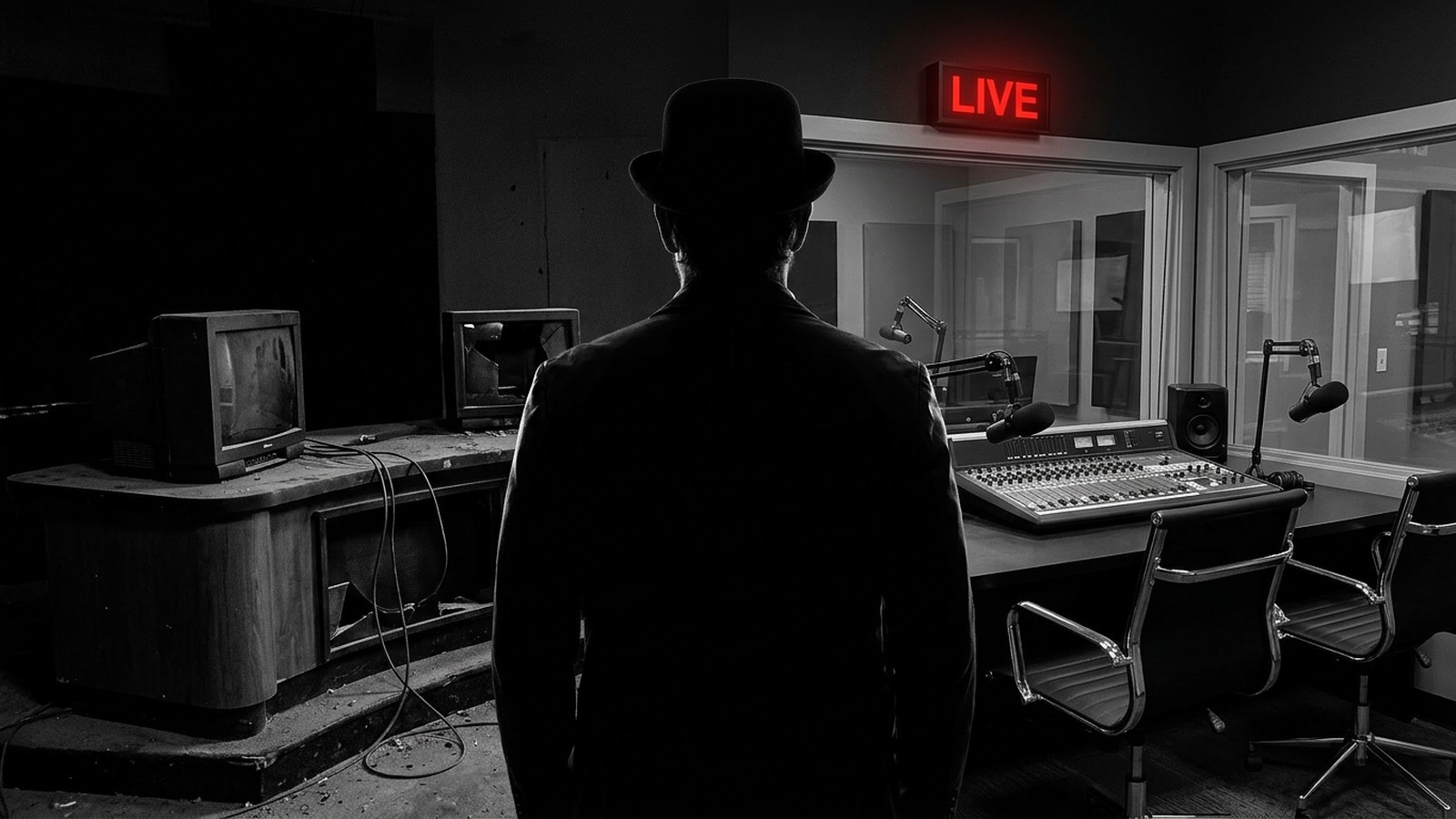
Every morning, somewhere in America, a television anchor reads a teleprompter into a camera pointed at nobody in particular. The lights are bright. The desk is spotless. The banter between segments is timed to the second. And the ratings keep sliding.
Morning television is not dying because the audience got distracted. It is dying because it stopped being honest. It built itself on the premise that comfort was enough—that a polished format, a familiar face, and a safe read of the overnight news was a sufficient reason to show up in someone's kitchen every day. For a long time, that worked. Then the world changed, and morning television didn't.
Let's be clear about what actually changed: the bar for a trusted voice got higher, not lower.
The Format Outlived the Contract
Legacy morning shows were designed for a different kind of morning. The house had one screen. The family was in the same room. The show was the ambient soundtrack of getting ready—weather, headlines, a celebrity doing press rounds, and enough pleasant noise to keep the silence at bay. That was a real job. It served a real need. Nobody should pretend otherwise.
But that morning no longer exists for most people. The phone is already on before the feet hit the floor. The inbox from the other side of the world landed overnight. The kids have three competing schedules. The day is already loud before you've made a single decision about what matters. Modern mornings are not casual. They are contested.
In that environment, a show designed to fill time at low stakes is not comforting. It is expensive. It costs you something you don't have: the twenty minutes it takes to realize the show isn't actually talking to you. It's talking at a demographic profile that a media buyer approved in 2009.
The modern viewer has a finely tuned sensitivity to performance. They know when a host is reading versus thinking. They can feel the committee in the room—the segment producer who approved the joke, the brand partner who approved the topic, the standards team that approved the outrage level. Once you can feel the machinery behind the warmth, the warmth is gone. Morning television ran out of warmth and replaced it with production budget. That trade does not work.
The Habit Is Not Dead. The Format Is.
Here is the part that gets lost in the conversation about morning TV's decline: people have not stopped wanting a morning ritual. They have stopped accepting a bad one.
The human need for a trusted morning anchor is not nostalgia. It is biology. We are rhythmic creatures. We return to what is familiar. We form habits around things that make us feel oriented. A voice we trust in the morning is not a luxury—it is a frame. It tells us what we are paying attention to, what we are ignoring, what we are laughing at, and what we are building. That is a powerful function. Morning television held that function for decades. It did not lose the function. It lost the right to hold it.
The function is still available. The slot is still wide open. What fills it now has to earn it differently.
What Alive Actually Looks Like
The replacement for legacy morning television is not a podcast with good lighting. It is not a YouTube show with slightly higher production value. It is not a newsletter with a friendly tone. The replacement is live, participatory, human-led morning media—and the distinction matters more than it sounds.
Live means it is happening now. Not recorded last Thursday and dropped on a schedule that pretends it's fresh. Live means the host can think in real time, react to something that happened at 7 AM, pivot when the conversation goes somewhere unexpected, hold the room when the energy shifts. Live is a commitment. It is also a credibility signal that no amount of editing can replicate. You show up in real time when it would be easier to hide behind a polished cut, and the audience knows you mean it.
Participatory means the audience is not a spectator. The room has a pulse because the people in it are shaping the room. A question from a regular viewer lands in the middle of a segment and changes the direction. A callback from last week's show becomes a running thread. The show accumulates context. It builds a shared history with the people who come back every day. That is not a feature. That is the whole value proposition. Return is the game in a world drowning in content. The only way to generate return is to give people a reason to feel like they belong.
Human-led means a real person with a real nervous system is at the center. Not a brand. Not an algorithm. Not a format designed by an optimization model. A human who has judgment, who makes calls in real time, who earns credibility by being consistently present and consistently honest. The host is the product. The trust they build is the asset.
AI Is in the Room. It Is Not the Room.
The obvious question at this point is where artificial intelligence fits. The answer is not complicated, but it gets confused constantly.
AI belongs in morning media the way a great production team belongs in a great show. It can pull references fast. It can surface context that makes a segment sharper. It can run a character in a segment, generate a beat, help with pacing, make the show more intelligent per minute. AI can take a human host and amplify their reach, their range, and their consistency. That is real value.
What AI cannot do is replace the human nervous system at the center. It cannot replace the judgment that comes from genuinely caring about the people in the room. It cannot replace the credibility earned by showing up live when something goes sideways and holding the frame anyway. An AI-run morning show is not morning media. It is content. Content and media are not the same thing. Content fills time. Media builds trust. The distinction is everything.
The future of morning media is human-led and AI-amplified. Not the other way around. The moment the amplifier becomes the lead, you have rebuilt exactly what killed morning television in the first place—a format where no one is really home.
The Audience That's Ready
Gen X sits right at the center of this shift. They grew up with the old world and live in the new one. They remember when morning television was the frame for the day, and they remember when it stopped being honest. They carry families, careers, aging parents, and real pressure. They want presence, intelligence, humor, and something that respects their time. They will not sit through fake warmth. But they will come back every single morning for something that actually earns their attention.
That audience is not a niche. It is a foundation.
The Builders Have the Advantage
Morning television is dying. That is fine. It ran its course and served its time. The grief is optional.
What is not optional is understanding what comes next. The people building the new morning formats right now—live, participatory, human-led, AI-amplified—are not building shows. They are building places. Rooms with a pulse. Rituals with a reason to return. Trust accumulated one morning at a time.
In media, a show can be cancelled. A room people belong to is much harder to shut down. Morning television was always a show. The opportunity in morning media is to build the room.
The slot is open. The habit is alive. The only question is who earns it.