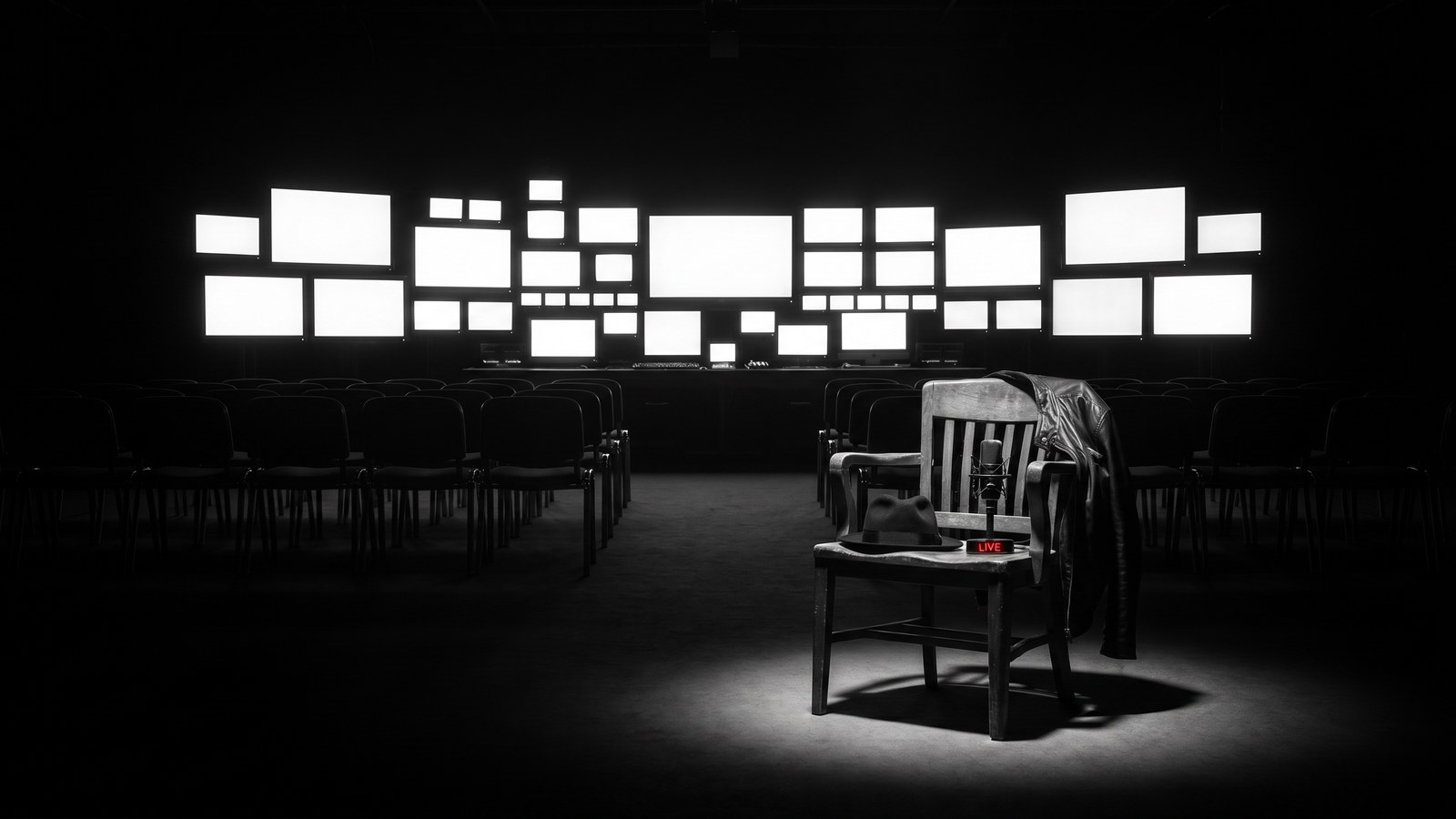
AI is getting very good at simulating connection. Companionship bots that learn your patterns and respond to your moods. Hyper-personalized content tuned to what keeps you engaged. Immersive environments designed to feel inhabited. On-demand conversation available at any hour, never tired, never distracted, never busy with something else.
And the more convincingly connection is imitated — the more the simulation improves — the more genuinely scarce the real thing becomes.
This is not a distant concern. It is already reshaping how people relate to each other, what they trust, and what they're willing to pay for. The economics of human presence are shifting in real time, and most people haven't caught up to what that actually means.
When Authenticity Becomes the Scarce Resource
Scarcity is the oldest driver of value we know. When something moves from abundant to rare, its price — economic and social — rises accordingly. We've watched this happen with physical goods, with attention, with access. We are now watching it happen with genuine human presence.
The more AI saturates the landscape of communication and connection, the more valuable the unmediated human version becomes. Real attention — given by a person who chose to give it, who has something at stake, who could have been elsewhere — starts to mean something different than it did when it was the default. It becomes a signal. A form of trust. Proof that what you're experiencing is not manufactured.
This is bigger than any single industry or behavior. It is a fundamental shift in what embodied presence communicates — and what people are willing to do to access it.
The Paradox Nobody Wants to Sit With
The deeper you go into this, the more uncomfortable it gets. We are building systems that simulate intimacy, companionship, and engagement with increasing sophistication — and those systems are filling real gaps in real lives. Loneliness is already a documented public health crisis in most developed countries. Companion apps are not serving people who have abundant human connection. They are serving people who don't.
So here is the paradox: the technology that simulates connection is simultaneously making genuine connection more valuable and harder to sustain. The more people substitute synthetic connection for real connection — not out of preference, but out of availability — the more they lose the practiced ability to show up for each other in the unscripted, unfiltered, sometimes awkward reality of actual presence.
We are not prepared for the psychological and social consequences of that drift. And the evidence is already accumulating — in isolation rates, in the explosion of loneliness research, in IRL events selling out precisely because people are starved for something they can't describe but immediately recognize when it's in the room.
Real Connection Is Becoming the Premium Experience
The market is already responding to what people sense but can't fully articulate. In-person events that charge premium prices for the experience of being in a room with people who are genuinely engaged. Communities built around physical gathering, shared rituals, and the kind of accountability that only exists when people can see each other's faces. Mentorship and friendship that happens body-to-body rather than screen-to-screen.
These aren't nostalgic retreats. They are rational responses to a scarcity that is being created in real time. The more the digital world expands, the more the analog experience commands a premium — not because it is more convenient, but because it is more rare.
What I've watched build inside Mornings in the Lab confirms this at a smaller scale. The most resonant moments — the conversations that people carry with them, the connections that develop into something real — happen when people experience genuine presence, not just polished output. When the human in front of them is actually there, actually uncertain, actually responding in real time to something that wasn't scripted. That's what synthetic connection can't produce, no matter how sophisticated the model gets.
The Question Worth Building Around
As AI absorbs more of what communication looks like — more of the volume, the polish, the availability — the question for anyone building something worth building is not how do I use AI more efficiently. That question will answer itself. The real question is: what part of what I do remains irreducibly human, and am I leading with it?
Judgment. Presence. Earned trust. The willingness to be in the room when it's uncomfortable. Community that demands something from its members and gives something back that can't be downloaded. The kind of attention that is only possible because a person with real stakes chose to show up.
AI didn't eliminate human connection. It exposed how much of what we were passing off as connection wasn't. And in doing so, it created the conditions for something more honest — and far more valuable — to take its place.
The rarest thing in an AI-saturated world is a human being who is genuinely, unambiguously, proof-of-life present. That is not a niche. That is the next frontier.