There's a line I keep hearing, maybe you've heard it too: "Science used to believe a bunch of wrong stuff. It'll be wrong again. So why trust it now?"
And look — there's a kernel of truth buried in there. Science has absolutely been wrong before. We've buried entire belief systems: four humors, phlogiston, the luminiferous ether. Nutrition advice has flipped more times than a politician during election season. Even Newton got updated once Einstein showed up and said, "Nice work — but it depends."
So the question lands hard: if so many accepted ideas got tossed, why should I trust what experts say today?
But here's the trap that question sets: it forces you into two equally crappy options — blind faith or total cynicism. As if you either worship science uncritically, or you treat the whole enterprise as a scam. That's not real life. That's not how any of this actually works.
The Mistake Everyone Makes: Treating All Science as One Thing
"Science" isn't a single giant machine that is either trustworthy or broken. It's a messy, sprawling collection of neighborhoods — different fields, different tools, different standards, wildly different levels of reliability. And that distinction changes everything about how you should think about any given claim.
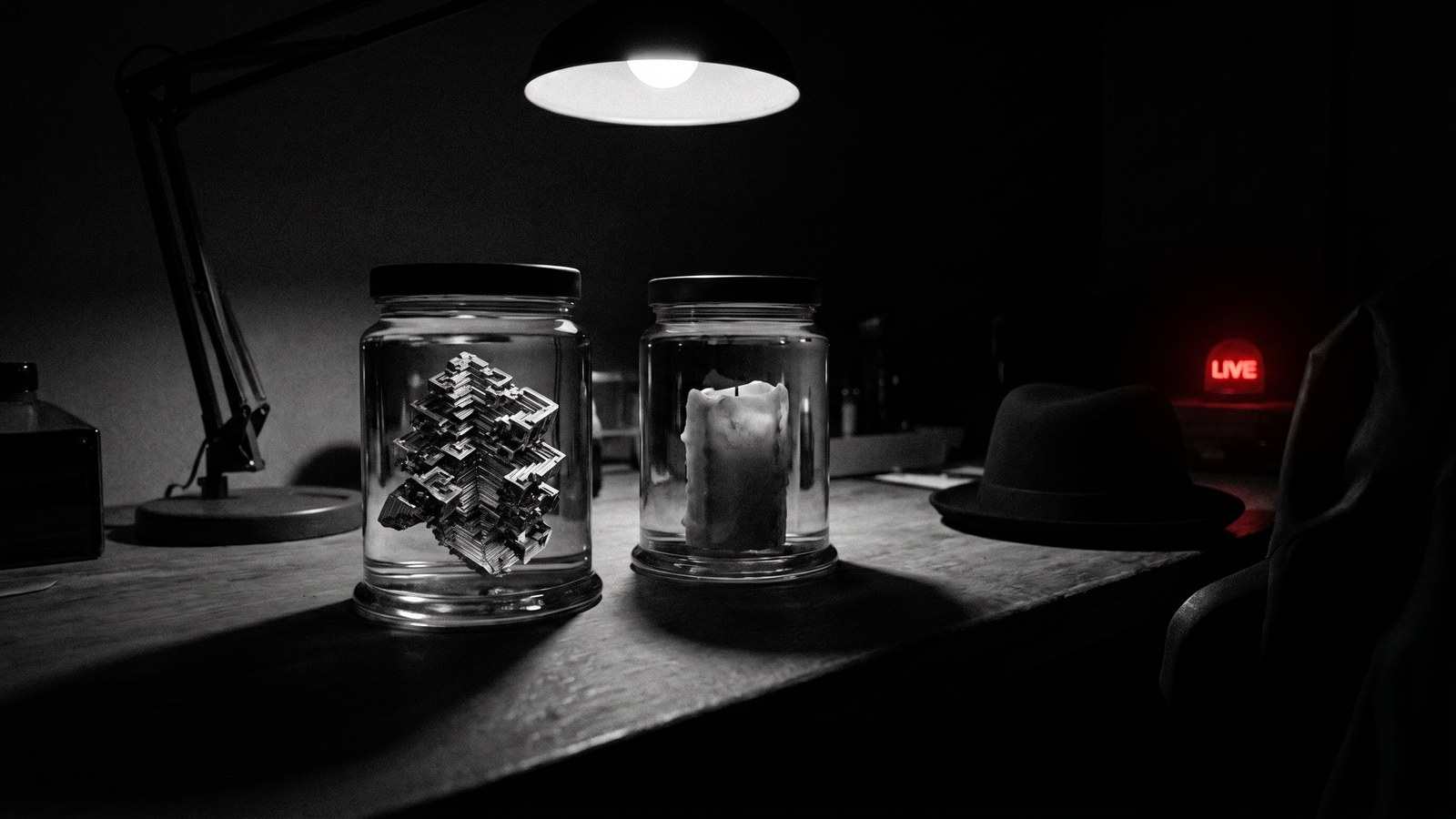
Here's an example you can actually feel. If you melt a few samples of a pure element — say, bismuth — and they all melt at the same temperature, it's pretty safe to conclude bismuth melts at that temperature. Why? Because elements are consistent. Same structure, same atomic behavior, same result across tests. The claim is reliable because the subject is stable.
Now do the same thing with wax candles. Melt a few, get a temperature reading, and then declare: "All wax melts at this temperature." That's a clown move. Because wax isn't one thing. It's a mixture. Different blends, different additives, different melt points. Same reasoning, completely different trust level.
That's the point most people miss entirely: whether a scientific claim is reliable depends not just on the method, but on the nature of what's being studied and how stable that world actually is.
"Science Evolves" Is Not a Dunk — It's the Whole Point
We've all seen moments where public guidance changed and people pointed at the reversal as proof of corruption. Early messaging on something, later corrections, updated recommendations — and a chorus of voices going: "See? They lied. They don't know anything."
But changing conclusions doesn't automatically mean the process is broken. Sometimes it means the evidence got better. Sometimes it means the situation changed. Sometimes it means the earlier confidence was overstated — which happens, especially in early-stage research with small sample sizes and publication pressure. Sometimes it means incentives distorted the work. Sometimes it means humans, as it turns out, are imperfect.
The correct response to all of that isn't "trust nothing." It's disciplined trust.
What Disciplined Trust Actually Looks Like
Disciplined trust is not gullibility. It's also not the lazy version of cynicism that lets you dismiss anything inconvenient. It's something more precise than either.
Be skeptical locally, not globally. Judge this claim, in this domain, with this level of evidence — not "science" as an abstraction. Don't pretend the field of early nutrition research and the field of structural physics occupy the same epistemic ground. They don't.
Some areas are rock-solid. Others are still wobbly. Early-stage medical research can be genuinely messy — replication failures happen, sample sizes are small, statistical games are real, overfitting is a documented problem. Heavy skepticism in those zones is earned. But don't let that bleed into treating gravity as a vibe or pretending Newton was useless because Einstein expanded the map. Einstein didn't erase Newton. He extended it. Newton still works incredibly well in most everyday contexts.
Five Questions Worth Asking Before You Accept Any Bold Claim
When you hear a claim that moves you — either toward belief or toward dismissal — try running it through this:
First: what domain is this? Physics and chemistry are not early nutrition studies. Early nutrition studies are not preliminary medicine. The domain determines the baseline reliability.
Second: how mature is the evidence? One study is a starting point. Many replicated studies are something else. Meta-analyses of replicated studies are something else again. Know what you're actually looking at.
Third: what are the incentives? Who benefits if this turns out to be true? Follow that thread before you accept or dismiss.
Fourth: how measurable and stable is the thing being studied? Bismuth or wax? Consistent and atomic, or a complex mixture with shifting properties?
Fifth: what would change the conclusion? If there's no possible evidence that could move someone off their position, that's not science — that's a belief system wearing science's clothes.
That's not anti-science. That's pro-reality.
The Graveyard Is a Feature, Not a Bug
The history of science is a graveyard of dead theories — and that's actually a flex, not an indictment. Dead theories are proof the process corrects itself. The updating is not the weakness. It's the engine.
So don't give science naive faith. But don't do the lazy thing and declare the whole enterprise untrustworthy because you caught it evolving in public. Practice disciplined trust. Be skeptical with precision. Let better evidence earn more confidence — not because you decided to believe, but because the evidence actually moved.
That's the adult version of this conversation. And we could use a lot more of it.