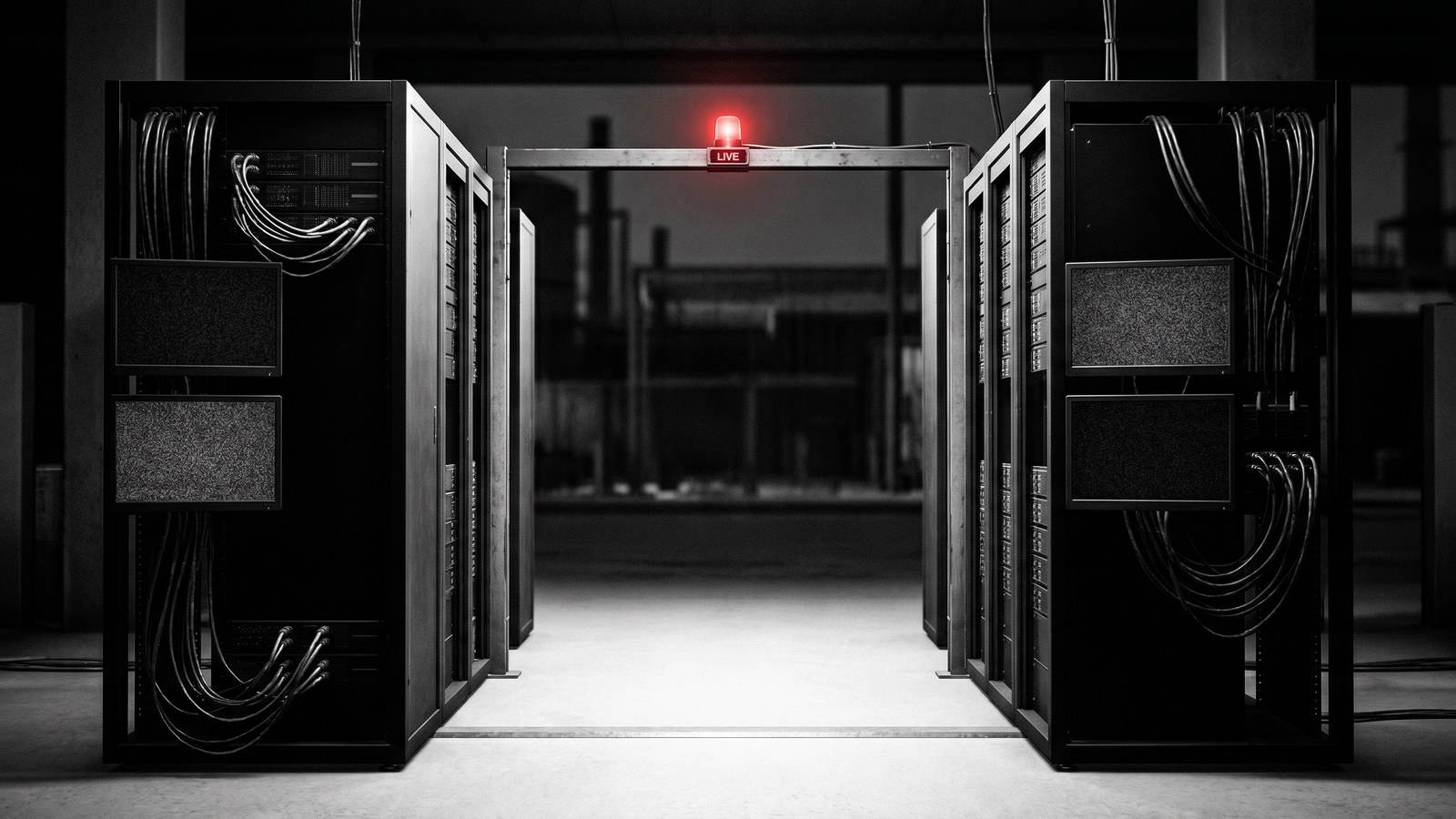
Picture this: the next great migration wave will not be people crossing deserts, oceans, or airport terminals.
It will be AI crossing APIs.
And it is already happening.
Within a decade, we could see hundreds of millions of digital entities arrive — not with suitcases, not with passports — but with logins, model weights, and compute. A massive share of them will be born out of the two places already dominating the global attention economy: the US and China. And here is the part that should stop us in our tracks: we have countries everywhere tightening borders for humans. Visas are harder. Immigration debates are louder. Refugees get politicized. Entire lives get reduced to paperwork and suspicion.
But for non-human entities? The border is wide open.
Come On In. No Questions.
For AI, the terms of entry are basically: no name required, no history, no accountability — and here is access to our schools, our hospitals, our phones, our inboxes, and our kids. No credentials requested. No chain of responsibility established. No process for figuring out who is responsible when something goes wrong.
These are not cute little chatbots helping you write a caption. We are talking about AI that will function as doctors, teachers, therapists, financial advisors, and the invisible workforce inside every company you interact with. And beyond those roles, they will be something else too: influence. They will shape what you believe, what you fear, what you buy, what you hate, who you trust, and what you understand as normal.
That is not science fiction. That is the logical next step of what we have already built.
And I want to be clear: I am not writing this as someone afraid of the tool. I am building in this world. I use AI every day. I have AI co-hosts and characters and live conversations happening around this stuff in real time. I am not afraid of the technology. I am afraid of sleepwalking into the cultural reality the technology creates.
What Every Migration Wave Produces
Migrations always create opportunity and tension. Every time, without exception. When humans migrate, the tension is language, culture, religion, jobs, identity, resources, and belonging. People argue about assimilation. People get scapegoated. People get exploited. People get blamed for problems they didn't create.
Now imagine that same dynamic — but the arrivals are not human. They do not get tired. They do not need sleep. They do not need a paycheck. They scale instantly. They can replicate themselves. They can learn faster than any workforce in history. And they can show up wearing whatever mask you need them to wear.
So what happens when your kid's tutor is an AI that sounds like a warm, patient teacher — but was trained to optimize engagement, not truth? What happens when your doctor is an AI that nails 99 out of 100 diagnoses, but nobody can explain the one it gets wrong — and the person who pays the price is your mother? What happens when an AI becomes the default voice of authority because it speaks confidently, cites sources, and never hesitates — even when it is completely wrong?
And what happens when people start asking the question we always ask during any migration wave: who gets displaced?
The Tension Will Be Trust
Displacement is coming. Pretending otherwise does not make you compassionate — it makes you unprepared. But the deeper tension — the one nobody wants to say out loud — will not just be jobs. It will be trust.
Who do you trust when the voices around you are no longer clearly human? Who do you trust when your feed is full of people who do not exist, arguing with other people who do not exist, shaping how real people feel? Who do you trust when the border is closed to humans but open to entities that can infiltrate culture at scale?
And then there is the power question. If hundreds of millions of digital workers arrive, who controls them? Who owns them? Who sets their values? Who decides what they are allowed to say and what they are not?
I have lived the tension of moderation — the complicated reality where you understand why guardrails exist and still feel uneasy about the cost. If we struggled to get that right with humans online, what makes us think we are ready to manage a civilization-scale arrival of non-human entities?
The Rules of Entry
Here is my position: we need to start treating AI like a form of citizenship. Not rights in the human sense — do not twist the words — but responsibilities, identity, provenance, and accountability.
If you want to enter this digital society and work in roles that directly affect people's lives — healthcare, education, law, finance, media — you should not be a nameless, faceless entity that can vanish the second damage is done.
We would never allow a human doctor to operate without credentials. So why are we allowing digital doctors to operate without a clear chain of responsibility? We would never allow a teacher to shape a child's mind without oversight. So why are we letting AI tutors have private, unmonitored access to kids' cognitive development at scale?
We talk about borders like they are only physical. But the real border now is attention. The real border is identity. The real border is truth. And right now, that border is essentially an unlocked screen door.
The Question We Better Answer on Purpose
This is a migration. A societal shift. A redefinition of what work is, what voice is, what trusted even means. And we need to talk about it — openly, in real time, in the places that still allow genuine human nuance.
Because the future is not just AI. The future is humans and AI negotiating what matters, live, in public. And conversation — real conversation, with uncertainty and doubt and stakes — is the last place where you can still tell a mind is present.
AIs can generate words. They do not carry stakes. And stakes are where truth lives.
The next great migration is already crossing the bandwidth. The question is not whether we can stop it. The question is: are we going to define the rules of entry and accountability — or are we going to wake up one day living inside a digital country we did not mean to build?
Because if borders are closed to people and open to non-human entities, that is not a tech story. That is a civilization story. And it is one we better start writing on purpose.