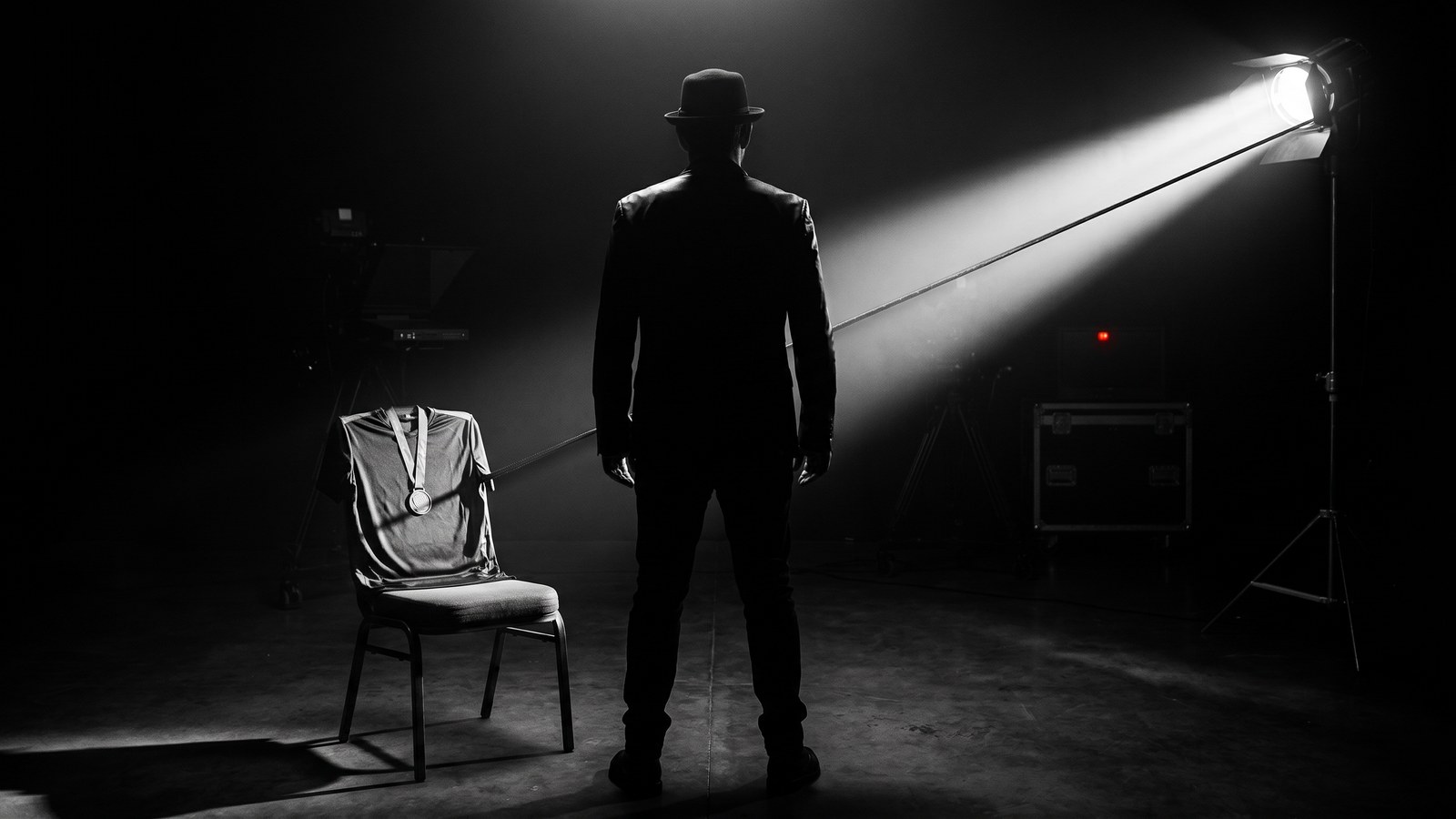
You can win an Olympic gold medal and wake up the next day to find out it's not about the win.
It's about where you stood. Who you stood near. What that proximity supposedly says about you.
We used to pretend sports was the one space where all of that disappeared — where you could show up, cheer, lose, win, hug strangers, and feel something real without anyone turning it into a referendum on your values. That was the deal. Sports as sanctuary.
That deal is over.
What the Political Machine Wants from Sports
Sports gives legitimacy without requiring you to earn it. That's why the political machine loves it.
If you can wrap yourself in a team, in a flag, in a gold medal, you can borrow the emotion. You can borrow the unity. You can take the trust that people give to athletes — built through years of sacrifice, training, competition — and hand it to a political moment as if it's transferable. As if the gold medal comes with an endorsement attached.
Look at what happened with the U.S. men's hockey team. Gold medal. State of the Union. Standing ovation. Massive symbolic moment. And within hours, the internet isn't talking about the game. It's talking about facial expressions. Who attended. Who didn't. Who's "with" the President. Who's against him. Who laughed at the wrong moment.
That's the trap. And it was set before a single player walked through the door.
There's No Safe Option — That's the Point
Here's what I want to name clearly, because I think most coverage misses it: the impossibility is deliberate.
Show up — you're endorsing. Don't show up — you're protesting. Say nothing — you're cowardly. Say something — you're divisive. There is no position that doesn't get read as a position. Because the point was never to understand where athletes stand. The point is to draft them. To use their legitimacy, their image, their achievement — without their consent, without their full understanding of how it's going to be used.
Athletes train their whole lives for a single moment of greatness. And then the second they get it, the world tries to turn it into a loyalty test. Not a celebration. A test.
What I'm Watching For
So what do you do with that?
I'm watching who can hold the line in public. Who can say — not in a press release, not in a managed statement, but in the actual moment — I'm here to honor what we built, and I'm not available for your manipulation. That's an almost impossible thing to do cleanly, especially when the cameras are on and the crowd is loud and half the room wants you to be a symbol.
But we're in a time where everything is trying to recruit you into a side. And if your identity becomes a jersey — political or athletic — you're easy to control. You've handed someone else the ability to define what your presence means.
The real flex in this era isn't picking the right side. It's being unbuyable. Not by money. Not by attention. Not by the mob. Not by the party. Staying recognizably human when the machinery around you is trying to convert your humanity into a symbol it can use.
We Didn't Lose the Game
Sports are political now. Not because athletes changed. Because the world around sports changed — the machinery that surrounds it, the media incentives that reward conflict over celebration, the political appetite for legitimacy that sport can provide for free.
And if we don't protect the few spaces that still feel real — the actual game, the actual achievement, the actual human story — we're going to wake up and realize we didn't lose the game.
We lost the ability to celebrate anything without it being weaponized.
That loss is worth naming. Loudly. Before it becomes permanent.