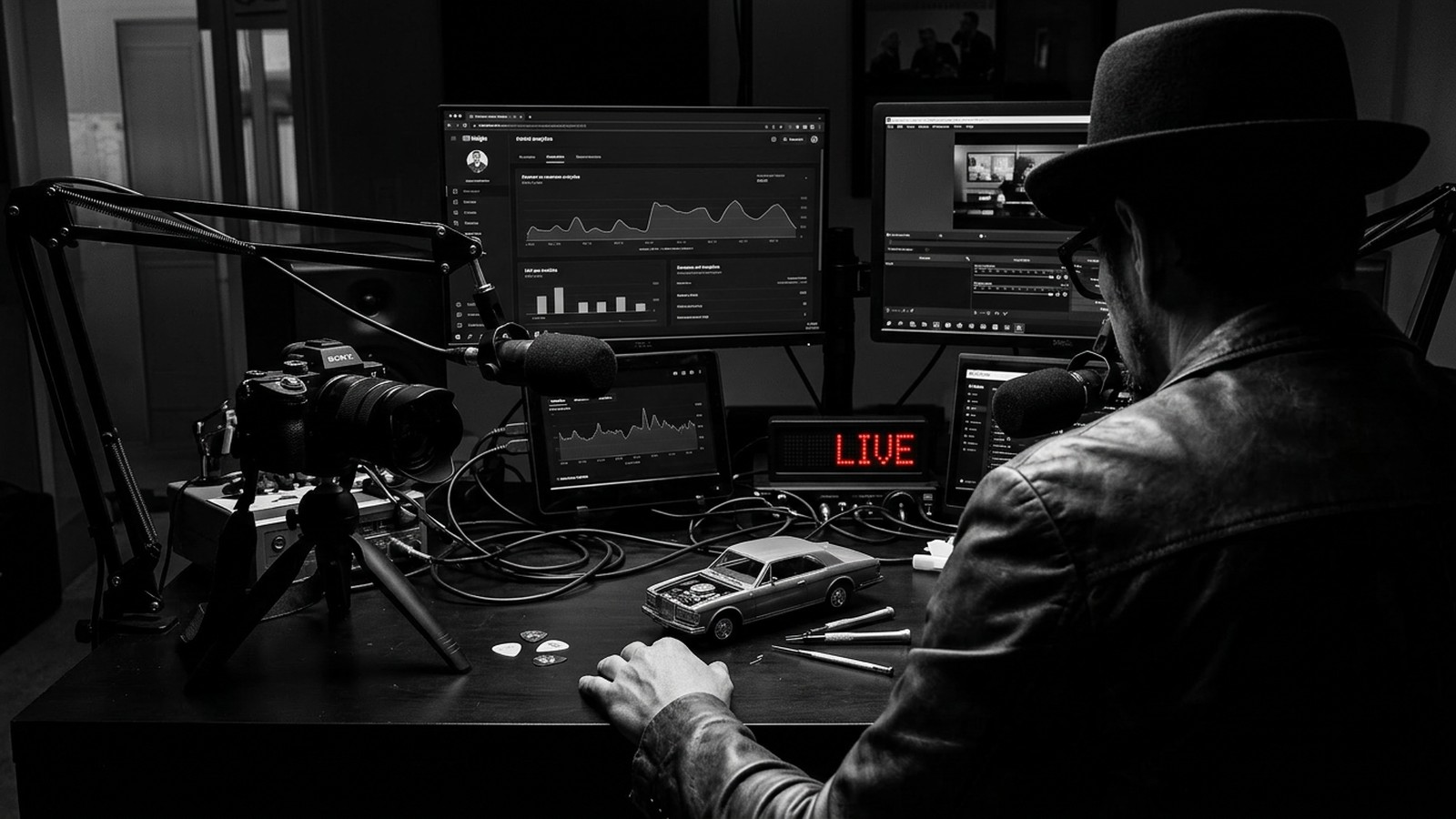
There was a moment — it probably happened gradually, so gradually you didn’t notice it — when everything you did for yourself became something you did for an audience. Not a real audience. Just the hypothetical one that lives in the back of your head, the one that is always watching, always judging, always waiting to know what you produced today.
That’s not freedom. That’s just a different kind of work with a nicer Instagram filter on it.
We accidentally turned hobbies into side hustles. That’s the short version. The longer version is that we built a culture so obsessed with optimization and output that it became impossible to do anything — anything — without first asking whether it could be packaged, monetized, or at minimum documented as evidence of a productive life. And most of us didn’t even fight back. We volunteered. We built the cage ourselves, convinced we were building a brand.
When Play Became a Content Category
Think about what hobbies used to mean. Not a side income. Not a niche. Not a passion project to mention in your bio. A hobby was just a thing you did because something inside you wanted to do it. You cooked a meal nobody photographed. You shot rolls of film that never got a following. You played golf badly on a Tuesday afternoon and nobody needed to know. The activity was the point. The feeling was the reward.
Somewhere between the rise of the creator economy and the gamification of everything, the definition collapsed. Now cooking is content. Fitness is a brand. Photography is a niche waiting to be monetized. Golf is networking. Books are funnels. Even rest has been rebranded as recovery protocol, as if sleeping requires a strategy and a tracking app to count as legitimate.
We don’t take walks anymore. We do steps. We don’t chill. We optimize. And we tell ourselves this is discipline — that we’re just being serious about life. But there’s a quiet cost nobody talks about, because admitting it feels like weakness: we’re exhausted in a way that sleep doesn’t fix, because we’re never actually off.
The Burnout Nobody Names
There is a specific kind of tired that comes from turning joy into a job. It is not the tiredness of hard work. It is the tiredness of never being allowed to be bad at something. Never being allowed to do something that goes nowhere. Never being allowed to enjoy a thing without simultaneously deciding whether it’s worth posting.
You set out to escape the pressure of work, and you recreate it on your own time with your own rules. The deadlines are self-imposed now. The metrics are your own follower count. The performance review happens every time you check your analytics. You started doing it for fun. You kept doing it for numbers. And now you’re not even sure which one you’re chasing.
That is not ambition. That is anxiety wearing ambition’s clothes.
The cruelest part is how invisible the shift is. Nobody tells you the moment your hobby becomes a hustle. It happens in increments — a better camera here, a posting schedule there, some keyword research, a course on monetization, a pivot toward what the algorithm rewards. By the time you realize you hate the thing you used to love, you’ve built an entire infrastructure around it. Quitting feels like giving up. So you keep going, optimizing a machine that was never supposed to run.
The Lie the Performance Economy Told You
The performance economy runs on one core belief: if you’re not broadcasting it, it doesn’t count. Unshared experiences don’t accumulate. Unrecorded progress doesn’t exist. The private life — the unmeasured, unposted, unscored life — is somehow a waste.
That is a lie. It is a profitable lie, and a lot of people need you to believe it. But it is a lie.
A run counts even if nobody sees the GPS data. A meal counts even if the only person who tasted it was you. A trip counts even if your phone stayed in your pocket the whole time. A hobby counts — especially counts — if you’re bad at it and you do it anyway, privately, for reasons that have nothing to do with building an audience or adding a line to your resume.
Because that’s where something essential lives. Not in the polished, documented, monetized version of your interests. In the messy, private, purposeless version. The one where you’re free to be terrible and love it. The one where nobody is grading you. The one that doesn’t need to justify itself to anyone.
That version of experience is where play lives. Where humility lives. Where creativity actually breathes — not the performed creativity of someone who needs to publish, but the real kind, the kind that exists purely because you were present in it.
What We Actually Need
The argument here isn’t against ambition. Ambition is good when it comes from something real — from love of the work, from a genuine vision, from the desire to contribute something. That kind of ambition is energizing. It pulls you forward.
What’s destructive is the reflexive monetization of everything, the compulsion to turn every interest into an income stream before you’ve even figured out whether you actually like it. That’s not ambition. That’s fear of being ordinary. Fear of wasted time. Fear of being seen doing something that isn’t paying off. Fear of not keeping pace with the highlight reel of strangers you’ve never met.
What people actually need — and almost nobody says this out loud — is sanctuary. Private space. Pockets of life that belong only to you, with no scoreboard attached, no metrics running in the background, no implicit promise to make it useful.
Men especially have been conditioned to believe that rest without productivity is failure. That if you spent the afternoon on something that didn’t produce value, you wasted it. That belief is doing enormous damage, quietly, to the quality of actual human experience.
The Challenge Worth Taking
So here is the actual challenge, and it’s harder than it sounds: find something you refuse to monetize. One thing. It doesn’t matter what it is — drawing, hiking, cooking, playing terrible chess, reading slow books, learning guitar badly. Find something and make a deliberate choice to never make it work for you. Let it just be.
Do it privately. Do it badly. Do it without posting. Do it without a goal beyond the doing of it. Do it because it quiets something in you that the performance economy has been keeping loud.
That’s not laziness. It’s not a rejection of ambition. It’s a recognition that a human being who cannot do anything unmeasured, unshared, and unprofitable is not free — they’ve just traded one job for several more and called it a lifestyle.
At some point, we forgot how to do something badly just because it made us happy. That specific forgetting is not a small thing. It’s how people end up optimizing their way right past the life they were trying to build.
The private, unmeasured spaces — the ones that don’t produce anything, don’t report to anyone, don’t exist on any platform — those are not the margin of a good life. They are the center of it. Keep them.