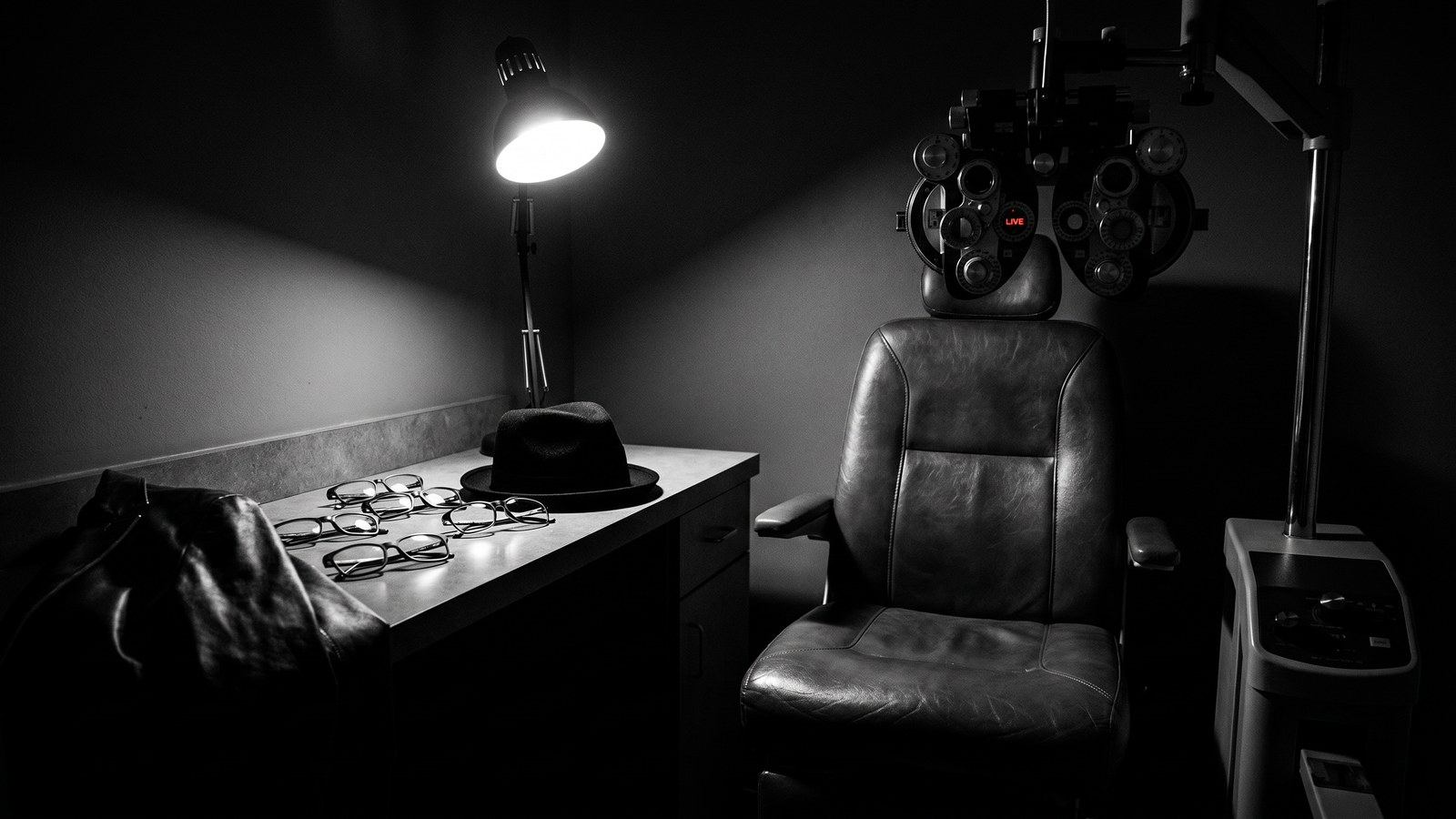
I'll be honest with you. I was scared.
Not scared of failure. Not scared of launching something new. Not scared of the pace I keep — the daily live show, the builds, the chaos that passes for a normal morning inside the Lab. None of that. I was scared because I had to go to the eye doctor.
Yeah. That kind of scared.
Think about that for a second. I've climbed mountains. I've negotiated eight-figure deals. I've stared down live audiences, walked away from a following of 350,000 people, sold a company, and rebuilt from scratch. I go live every single morning without blinking. And I'm sitting in a waiting room with sweaty palms because someone is going to shine a light into my eyes.
It Was Never About the Eye Test
The realization hit me while I was sitting there — palms going, chest a little tight, feeling like I was about to pitch a VC at 22 years old all over again. Why does something this routine rattle me?
Because it was never about the eye test.
It was about what the eye test represents. Aging. Vulnerability. The fact that there are parts of me I cannot outwork, cannot out-hustle, cannot optimize my way past. It was about letting someone get close enough to see something I couldn't see myself.
And that is profoundly uncomfortable for people who have built their identity around self-sufficiency.
I've run global companies. I've led teams across three continents. I've spent two decades being the person in the room who figures things out. So when a situation arrives that asks me to simply sit still, be seen, and trust the process — something in me resists. Hard.
The Superpower Nobody Posts About
Here's what I've learned, though: every time I walk through something that genuinely scares me — big or small, dramatic or embarrassingly mundane — something shifts on the other side.
I come out clearer. Sharper. A little more honest about where I actually am, not where I tell myself I am. A little more grateful for the fact that I still get to keep showing up — in the Lab, on air, in business, in life.
That's not a productivity hack. That's not a morning routine. That's the compound interest of walking toward discomfort instead of managing it from a distance.
At ICUC, we were inside millions of live conversations a month. We saw what happened when people performed their way through hard moments versus when they actually moved through them. The difference was visible in real time. The people who were performing were brittle — efficient on the surface, hollow underneath. The ones who were willing to be uncomfortable, to admit uncertainty in front of the team, to say I don't know out loud — those were the ones who built something durable.
Small Moments, Real Signals
The moments that shake us are rarely the dramatic ones. They're not the board meeting gone sideways or the investor who passes or the product that misses. Those are expected. Those we train for.
The ones that actually reveal something are the small ones. The ones we don't see coming because they seem too ordinary to require courage. An eye appointment. A doctor's visit. A conversation we keep rescheduling. A thing we've been meaning to deal with that we quietly slide to the bottom of the list every single week.
Those are the real signals. Not of weakness — of humanity. And if I've learned anything from twenty-plus years of building and rebuilding, it's that being human is not a liability. It's the whole point.
Being scared doesn't stop you. It sharpens you. It tells you that something real is at stake, that you're not just going through motions, that you're still paying attention to the things that matter.
Even if, occasionally, what you need to pay attention to is the prescription on your glasses.