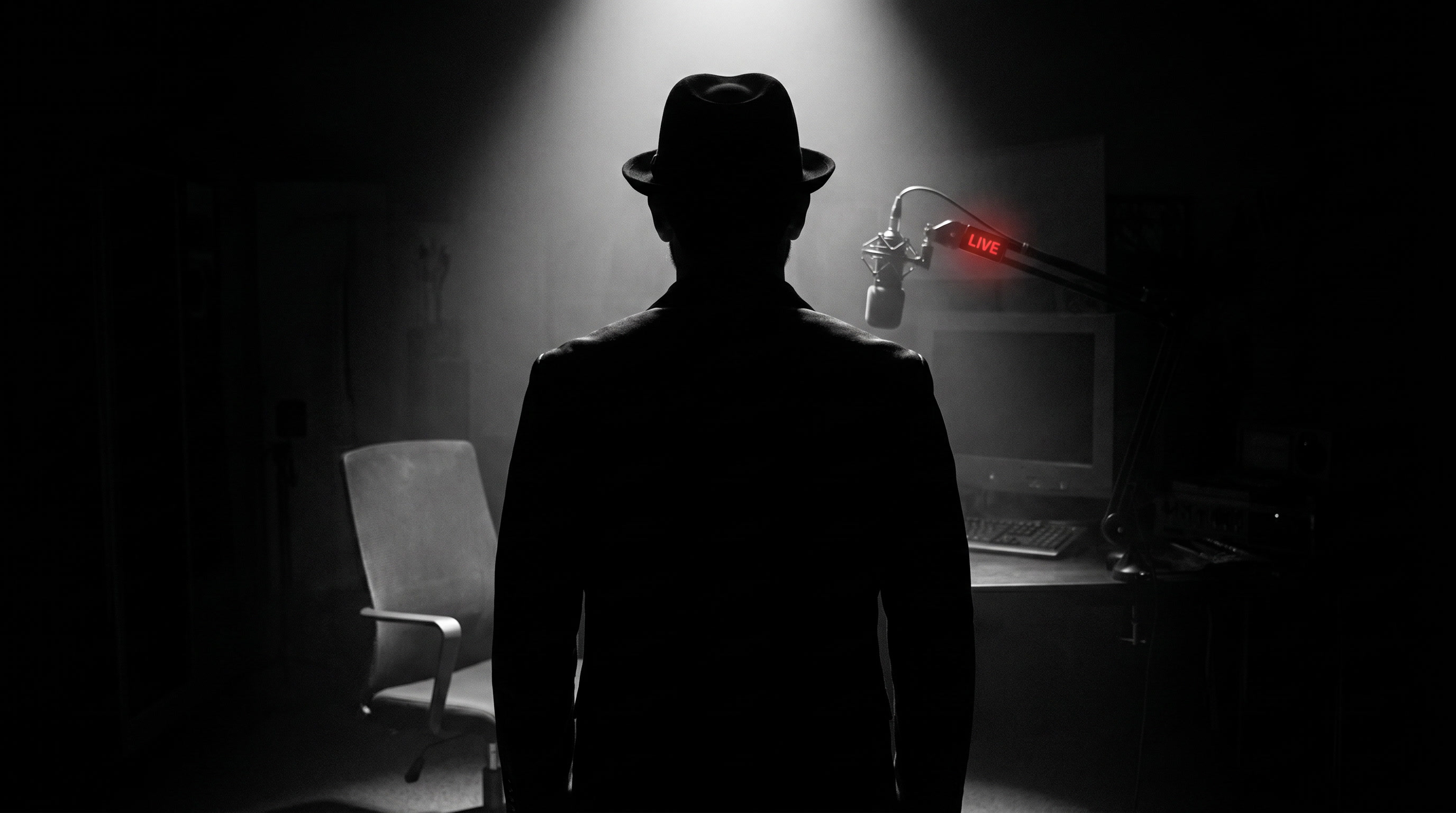
The noise machine runs on a simple equation: the more provocative the content, the more it travels. Outrage is the fuel. Fear is the accelerant. And the people who run it — the major platforms, the legacy networks, the algorithm architects — have no particular incentive to change that.
So a certain kind of person gets invisible.
Not because they're not interesting. Not because their stories don't matter. But because their stories don't generate the kind of engagement that feeds the machine. A veteran rebuilding his community after service doesn't trend. A first responder who spent twenty years protecting strangers doesn't go viral. A small-town leader who kept a neighborhood intact through a rough decade doesn't make the feed.
And if nobody tells those stories, those stories don't exist in the cultural record. The people who lived them disappear.
The Propaganda of Omission
We talk a lot about media bias in terms of what gets spun. We don't talk nearly enough about what simply doesn't get covered.
Because the most powerful editorial decision any platform makes isn't framing. It's selection. Who gets the microphone. Whose experience gets treated as relevant. Whose sacrifice gets acknowledged. Those choices — made daily, quietly, at scale — shape what a culture believes about itself.
When the stories that dominate the media ecosystem are stories of dysfunction, division, and spectacle, people internalize that as an accurate picture of reality. They start to believe that the builders aren't out there. That the quiet heroes don't exist. That community is dead.
That's not journalism. That's a slow kind of erasure.
The Case for Independent Platforms
The answer isn't to fix the mainstream. That argument is old and lost. The answer is to build something parallel — to create platforms where different stories can breathe, where people who'd never get a segment on cable news can sit down in front of a mic and tell the truth about their lives.
This is what's happening across the independent media landscape right now, and it's genuinely significant. Podcasting, independent publishing, digital storytelling networks built specifically around the communities the mainstream overlooks — these aren't backup plans. For a lot of people, they're the primary record.
A veteran who served for twelve years and came home to rebuild his town doesn't need a Netflix deal. He needs someone to set up a decent microphone, ask real questions, and let him speak at length without a segment clock cutting him off. That's it. That's the whole infrastructure of giving someone a voice.
Who Deserves the Mic
Here's what I've come to believe: the people who've earned the right to be heard aren't usually the ones who fought hardest to be heard. They're the ones who were too busy doing the actual work — serving, building, protecting, raising — to play the attention game.
That's not naivety. That's a feature. The people who haven't corrupted themselves chasing platform are exactly the people whose testimony you can trust. They're not performing. They're reporting.
There's a growing number of builders in the independent media space who understand this. They're not trying to compete with CNN or replicate the format of mainstream broadcast. They're doing something different: identifying the people who matter most in their communities and giving those people a quality platform, a real audience, and the dignity of being heard on their own terms.
Why This Matters for Creators
If you're building a media platform, a podcast, a show, a newsletter — anything that puts you in the role of curator and host — the most important question you can ask is: whose story am I telling, and who am I leaving out?
The stories that the mainstream ignores are not dead-end content. They're underserved demand. There are people out there who are hungry to see themselves reflected in the media they consume — not the sensationalized version, not the political football version, but the true version that starts with real respect for their actual lives.
You don't have to have a million subscribers to matter. You have to have the integrity to give the microphone to people who earned it, and the craft to help their stories reach the audience that needs to hear them.
The mainstream doesn't get to decide who matters. That decision belongs to the people who are paying attention.