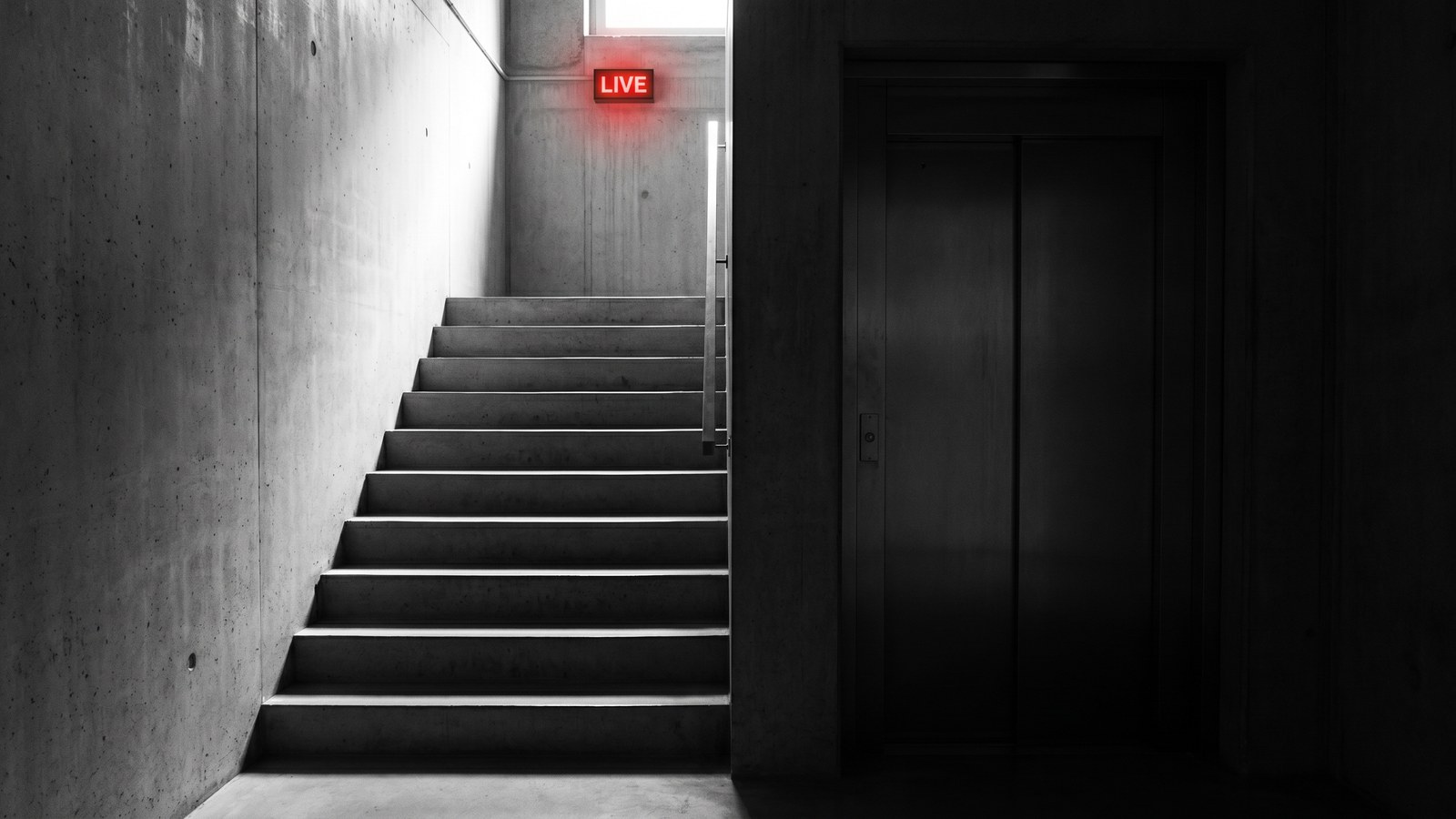
The stairs are right there. Every day. In every building, beside every elevator, available to almost everyone. And most people walk straight past them.
Not because they are lazy. The story is more interesting than that.
The Elevator Is the Grown-Up Snooze Button
Here is what the elevator actually is: it is the snooze button in architectural form. Same psychology. Same lie. It is just this once. It is just one ride. Just this morning. But it is never just once. That is not how the slide works.
The slide does not happen in dramatic meltdowns. It happens in micro-surrenders. A hundred small decisions, each one reasonable in isolation, that add up to a pattern. And the pattern, when you are honest about it, is a portrait of who you actually are when no one is watching — which is the only portrait that matters.
The stairs expose that portrait. That is why they are uncomfortable. Not physically. Psychologically.
Habit Stacking: Make It Mean Something More
Here is where this gets useful. You do not need motivation to take the stairs. Motivation is unreliable. What you need is a trigger — and then you stack.
The moment you see the stairs, that is the trigger. You take them. That is the habit. And then you attach a second identity move to the act of climbing, so the stairs become a practice, not just cardio.
- Stairs as posture reset. Shoulders back, chin up. You walk like someone who is in charge of their day.
- Stairs as breath work. Two deep nasal breaths before you climb. You are training calm under load.
- Stairs as self-talk rep. One sentence, every time: I do not press snooze on my life.
Now it is not exercise. It is programming. Because the real flex is not the steps — it is the story you are repeating to yourself while you climb them.
The Self-Agreement Problem
Here is the part that lands differently once you hear it: the stairs are not about fitness. They are about self-trust.
Every time you take the elevator instead of the stairs, you teach your nervous system something specific: I do not do hard things unless I absolutely have to. And every morning you hit snooze, you teach yourself: my word does not mean anything before 7 a.m.
When your word does not matter in the morning, do not be surprised when your word does not carry weight in your business. These things are not separate.
Most people think they have a time-management problem or a motivation problem or a discipline problem. They do not. They have a self-agreement problem. And a self-agreement problem is specific: it means you make commitments to yourself and then break them repeatedly — and the breaking has become the normal thing, the default thing, the thing your nervous system expects you to do.
If you cannot keep a promise that costs eight seconds — one flight of stairs — why would you trust yourself with a ten-year plan?
It Compounds
Here is the math: stairs become breath work becomes posture becomes self-talk becomes self-trust. Self-trust becomes bolder decisions. Bolder decisions become different career moves. Different career moves become a different life.
That chain looks ridiculous when you start at stairs. But the chain is real. Because identity is built from evidence, and every small kept promise is evidence you collect about yourself.
The alternative is also a chain. Elevator becomes snooze becomes soft. Not soft physically — soft mentally, spiritually. Soft enough to be controlled by comfort. Soft enough that when something actually hard shows up, you have not been practicing.
Next time you are standing there — elevator doors open, stairs right beside it — do not debate it. Take the stairs. Not for the cardio. For the record you are building with yourself. One step, one identity vote, one kept promise at a time.