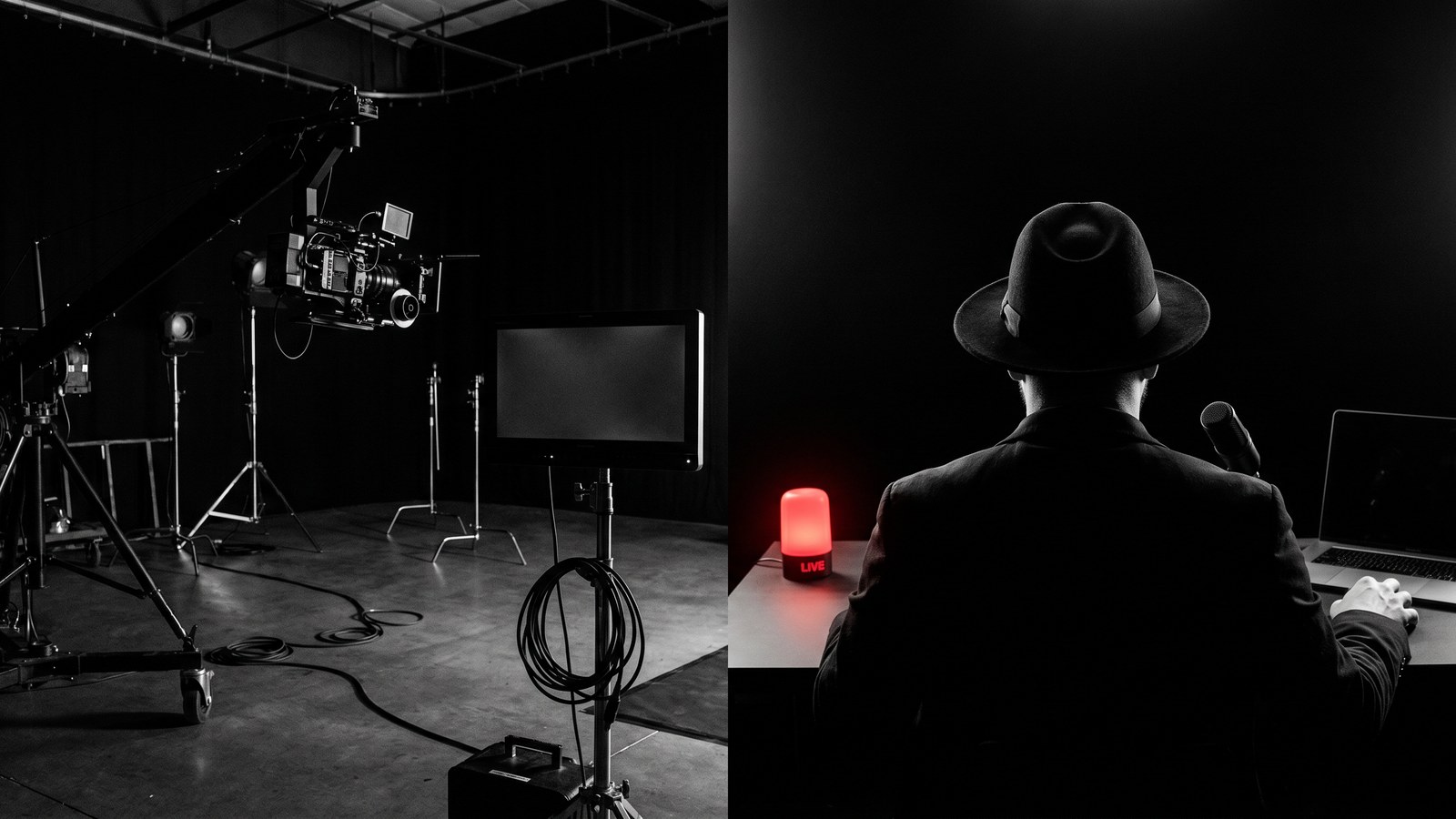
I watched a brand spend two hundred thousand dollars on a brand video.
And to be fair — it was beautiful. Lighting? Perfect. Script? Tight. Edit? Clean. Music? Emotional. The kind of video that makes the marketing team stand around a monitor saying things like "this is really good" and feeling like they did something important.
It got 12,000 views. And it generated nothing. No conversation worth reading. No replies with any heat in them. No DMs. No demand. No pipeline. Just a quiet little funeral for a very large budget.
Then I Watched a Laptop Win
Then I watched a 45-minute LIVE show — shot on a laptop, no crew, no studio, no post-production — create more real opportunities in a single week than that brand's entire content strategy had produced in a quarter.
The difference wasn't budget. It wasn't production value. It wasn't reach, or distribution, or a better content calendar. It wasn't even "better content" in the traditional sense. It was presence.
When you go LIVE, something in the audience registers that something real is happening. There is no safety net. No second take. No "we'll fix it in post." No strategically manufactured moment of vulnerability. What you see is what's actually there — and that matters more than most marketing teams want to admit, because it removes the very thing that makes polished content feel hollow.
The rawness isn't a weakness. In a LIVE context, the rawness is the product.
Polished Used to Mean Credible
Here's what shifted: polished used to signal credibility. It used to say "we're serious, we're professional, we care." And for a long time, that signal worked. Production value was a proxy for trust.
Now polished often signals manufactured. And audiences — who have been swimming in manufactured content for years — have developed a finely tuned instinct for it. They don't have to think about it. They just feel it. And they scroll past it the same way they scroll past a banner ad for something they never asked for.
Think about how you actually consume content. You can feel the difference between something engineered to impress you and something that is simply — actually — happening. The expensive thing looks impressive. The live thing feels real. And feeling real is what builds the asset that compounds over time: trust. Not impressions. Not reach. Trust.
LIVE still has stakes. And in a world where everything is engineered, optimized, and A/B tested into submission, stakes are the premium layer. They cannot be faked. The audience knows.
Receipts Over Impressions
You want attention? You can buy it. Paid media, boosted posts, programmatic placements — attention is purchasable. But when the budget stops, so does the attention. It doesn't compound. It doesn't refer. It doesn't remember you.
You want trust? You have to earn it in public. That's a different transaction entirely. And it has a completely different ROI curve.
Trust shows up in DMs. It shows up in deals from people who watched you work through something in real time and decided you were genuine. It shows up in referrals from people who feel like they know you because they watched you think out loud for 45 minutes on a Tuesday morning. It shows up in a pipeline that moves faster because the people in it already believe in you before the first call.
That's what LIVE builds. Not impressions. Receipts. And receipts build reputation. And reputation is the one asset no budget can manufacture on a deadline.
If you're still debating whether LIVE is "worth it" — I'll tell you directly: the debate is already costing you. Every week you spend deciding is a week your market doesn't know what you actually sound like under pressure, without a script, when something unexpected comes up and you have to think in front of them.
So the question I'll leave you with: What would happen if your brand stopped trying to look impressive — and started trying to be present?
Because presence doesn't go viral. Presence builds receipts. And receipts outlast every campaign you've ever run.