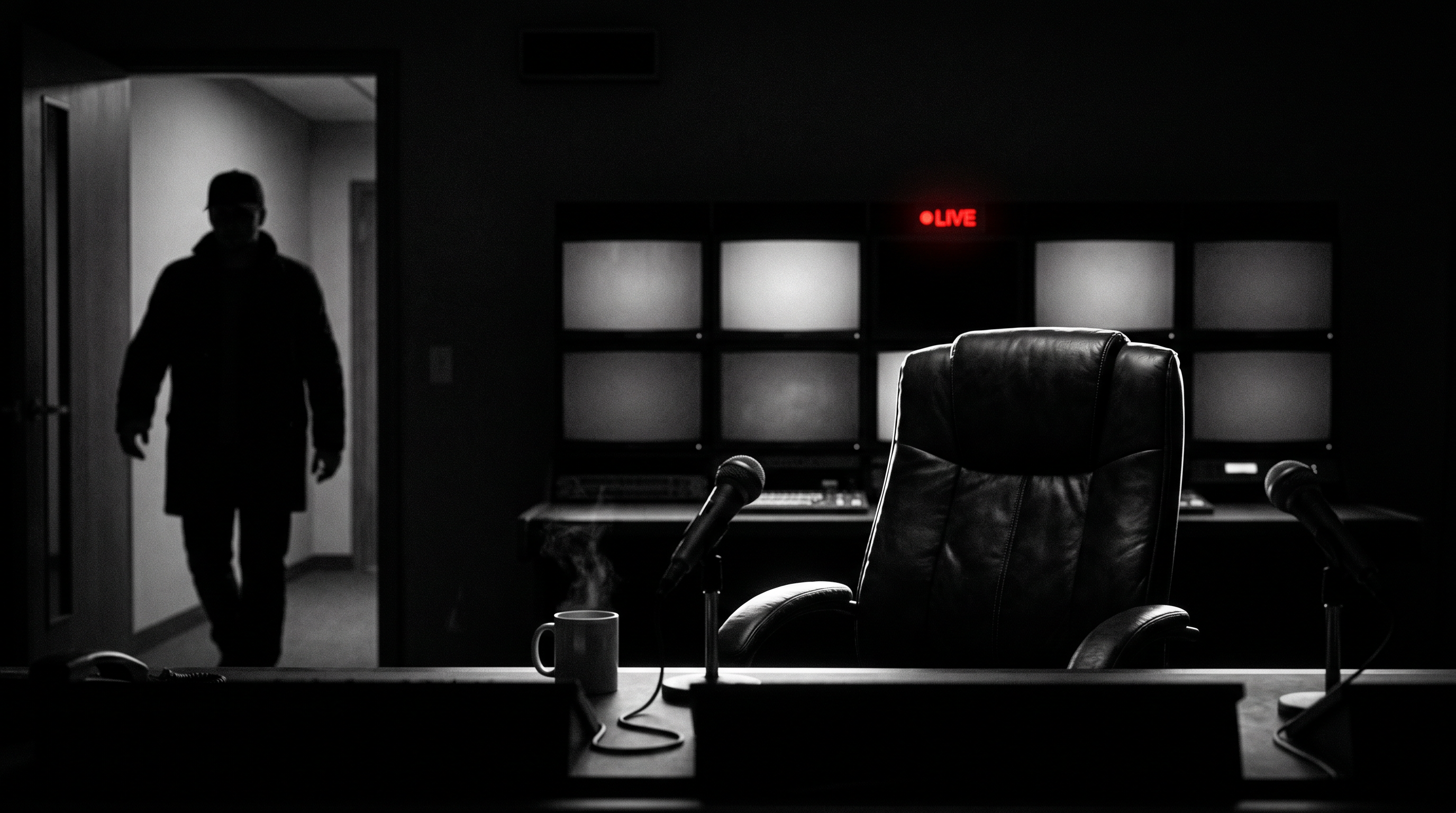
The morning used to be owned. Today Show. Good Morning America. Howard Stern. Your local morning drive DJ who knew your commute better than your spouse.
These weren't accidents. They were institutions. NBC didn't stumble into morning dominance, they engineered it, defended it, and held it for decades. Bryant Gumbel and Katie Couric weren't just hosts. They were fixtures. They were the alarm clock millions of Americans set their day against. Howard Stern at his peak had four million daily listeners who built their commute around him. Not because the content was always exceptional. Because it was there, every morning, without fail.
The morning slot was the most valuable real estate in media. Not primetime. Morning. Because mornings have a quality that no other daypart possesses: necessity. People don't choose their morning the way they choose what to watch at 9pm. They need something to orient the day. The media that filled that need didn't just earn audiences, it earned habits. And habits, in media, are worth more than any rating.
What Happened to the Morning
The collapse wasn't dramatic. It was gradual, then total.
Cable fractured the audience. DVR let people time-shift. Netflix proved that "appointment viewing" was a construct, not a law of nature. The smartphone arrived and handed everyone a personal infinite scroll, available the moment your eyes opened, faster than any television, more personalized than any radio station.
Morning media didn't lose an audience to a competitor. It lost an audience to chaos.
People went from having a morning ritual built around media to having no ritual at all. They went from Bryant Gumbel to Twitter. From Howard Stern to a podcast they forgot to download. From the morning drive DJ to a Spotify algorithm that starts with a song they like and ends somewhere they never intended to go.
The Today Show still exists. Good Morning America still airs. But they're not institutions anymore. They're habits that haven't fully died yet, sustained by demographics that formed them thirty years ago. The 35-year-old starting their day today has no morning anchor. They have a phone and a scroll and a vague sense that they should probably be doing something more intentional with the first hour.
Why the Internet Hasn't Filled the Gap
Here's the strange part: the morning has been empty for twenty years, and the internet has not filled it.
Not for lack of content. There is more morning content available right now than at any point in human history. Podcasts for your commute. Newsletters for your inbox. YouTube channels that post at 6am. Morning meditation apps. News briefings. Workout streams.
None of it has ownership. None of it is the thing.
Why? Because ownership requires something the internet doesn't naturally produce: daily, live, appointment-based presence with a consistent format.
Podcasts are asynchronous. You listen when you want, which means the format can't create a daily ritual in the way live can. Newsletters are passive. They arrive, they get read or they don't, but there's no shared moment, no sense that you and ten thousand other people are doing the same thing at the same time.
What made morning radio work wasn't the content. It was the liveness. The shared simultaneity. The fact that Howard was in the room right now and so were four million other people. That collective presence created something no on-demand format can replicate: the feeling of belonging to something happening in real time.
The internet has every format except that one. And that one is the one that owned the morning for fifty years.
The Opportunity Hiding in Plain Sight
I've been running a live morning show for years. Not because I had a strategy document that identified the gap. Because I felt the gap myself and built the thing I wanted to exist.
What I've learned is that the audience for a daily live morning format is not just available. It's hungry. The people who show up every day aren't showing up because the content is always exceptional. They're showing up because the format gives them a reason to. A consistent time. A live room. People they recognize. A structure that orients the start of the day.
This is not a niche audience. This is the majority of working adults who used to have a morning anchor and don't anymore. They didn't stop wanting one. They stopped having one available.
The morning doesn't need better content. It needs someone to own it. To show up every day, live, at the same time, with a format strong enough to become a habit.
That's not a content strategy. That's an infrastructure play. And the real estate is still sitting empty.