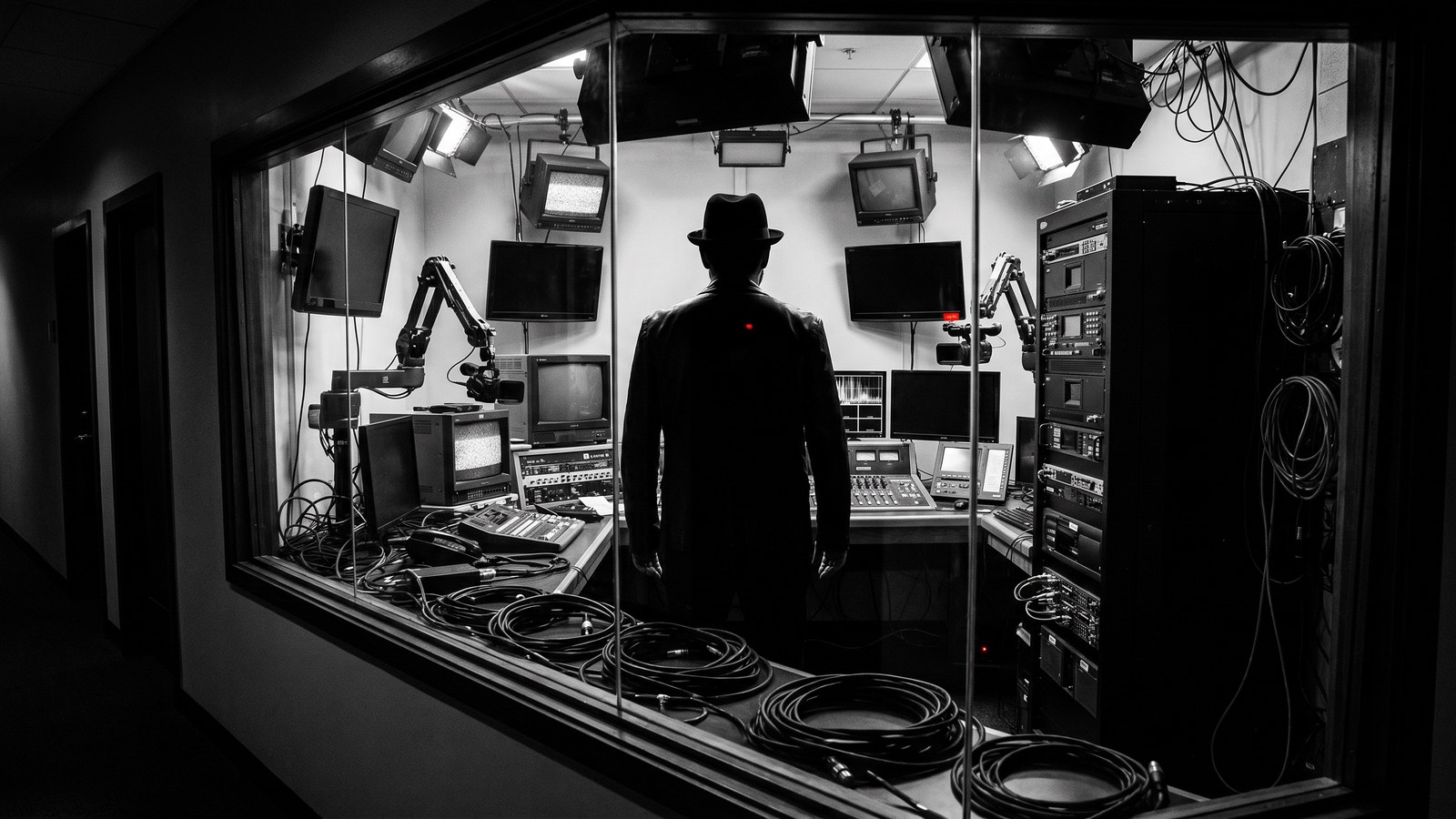
A lot of people are asking the wrong question about AI and media. Will it replace creators? Replace hosts? Replace writers? Replace human personality? That's not the most interesting question. The most interesting question is what happens when human personality gets amplified by intelligent systems in a way that makes media faster, deeper, more responsive, and more scalable than anything we've seen before.
That's the real shift. And once you see it, you cannot unsee it.
The Future Is Not Humans Versus AI
It's human judgment. Human taste. Human energy. Human trust. Human conviction — amplified by systems. Amplified by characters, memory, live inputs, orchestration, and infrastructure that can extend the reach and rhythm of the people at the center of it. That's a very different idea from replacement. That's elevation.
The next network is not going to look like the last network. It won't be a building full of cameras and control rooms and executives deciding what gets broadcast to a passive audience. It will feel more alive than that. More fluid, more adaptive, more character-driven, more interactive, more continuous. Real human hosts inside a larger, smarter system — one that never sleeps even when the humans do.
The Lowest Form of AI Is Cheap Replacement. The Highest Form Is Something Else.
When most people hear AI in media, they imagine synthetic faces, fake voices, soulless automation, mass-produced garbage flooding the internet. Sure, that exists. But that's the floor, not the ceiling. The ceiling is when AI becomes part of the creative nervous system — not the soul, not the center, not the source of trust, but the extension layer. The thing that helps a human signal travel further, faster, and with more dimensionality than any one person could do alone.
That's a completely different idea. And it matters because media has always been shaped by whatever infrastructure was available. Radio shaped the host. Television shaped the anchor. Podcasts shaped the long-form conversationalist. Social media shaped the clipped, algorithmic performer. Now AI is going to shape the next form — not by erasing people, but by changing what a media company can actually be.
From Show to Ecosystem
A media company used to be a set of people making content. The next media company will feel more like an organism. Part studio, part storyworld, part cast, part operating system, part network, part intelligence layer. That's a much bigger thing than a show.
Because in this model, one host is not just one host. One host can become a universe — with AI characters, supporting personalities, memory systems, live research, dynamic feedback loops, and production infrastructure that turns every conversation into compounding assets. You're not just making a show. You're building an ecosystem. And ecosystems are more durable, more valuable, and more defensible than shows.
IP, Worlds, and the Premium on Human Anchoring
The winners in this next era won't just have content. They'll have worlds. Worlds with characters, recurring patterns, inside language, audience participation, and memory. Worlds that blur the line between entertainment, conversation, utility, and belonging. That's not a media asset — that's a living network.
And here's the paradox: the more machine power enters media, the more important the human center becomes. The machine expands the system. The human still anchors belief. That's why the future won't belong to faceless automation. It will belong to trusted personalities with infrastructure — people with signal, presence, and a genuine point of view who understand how to build worlds, not just posts.
The People Who Understand This Early Will Define It
Most people are still evaluating the future using the standards of the past. They're asking whether AI content looks real enough. The more important question is whether the entire structure of media is about to change. They're debating whether a machine can imitate a person. I'm looking at what happens when a trusted person can suddenly operate with the scale, consistency, and responsiveness of a system.
That is a completely different future. The next great media companies will not look fully human or fully machine. They'll feel like something new — something blended, alive, continuous, and impossible to build in the old model. The people who see that clearly right now are not just going to participate in the future of media. They are going to define it.