Here is the thing about building something genuinely new: most people do not recognize it while it is happening. They recognize it later. After it is obvious. After the category has a name. After the market catches up, the language gets cleaned up, and the early weird parts have quietly become normal behavior.
But in the beginning? New things almost always look messy. Too early. Too niche. Too hard to explain. Too many moving pieces. Too different from what people already have a comfortable mental model for.
And that is precisely where we are right now.
The Obvious Layer Is Not the Whole Board
If you look at what we are building from the outside, the first description that comes to mind is reasonable: it is a morning show. Fair. That is the obvious layer. But it is not the whole board. Not even close.
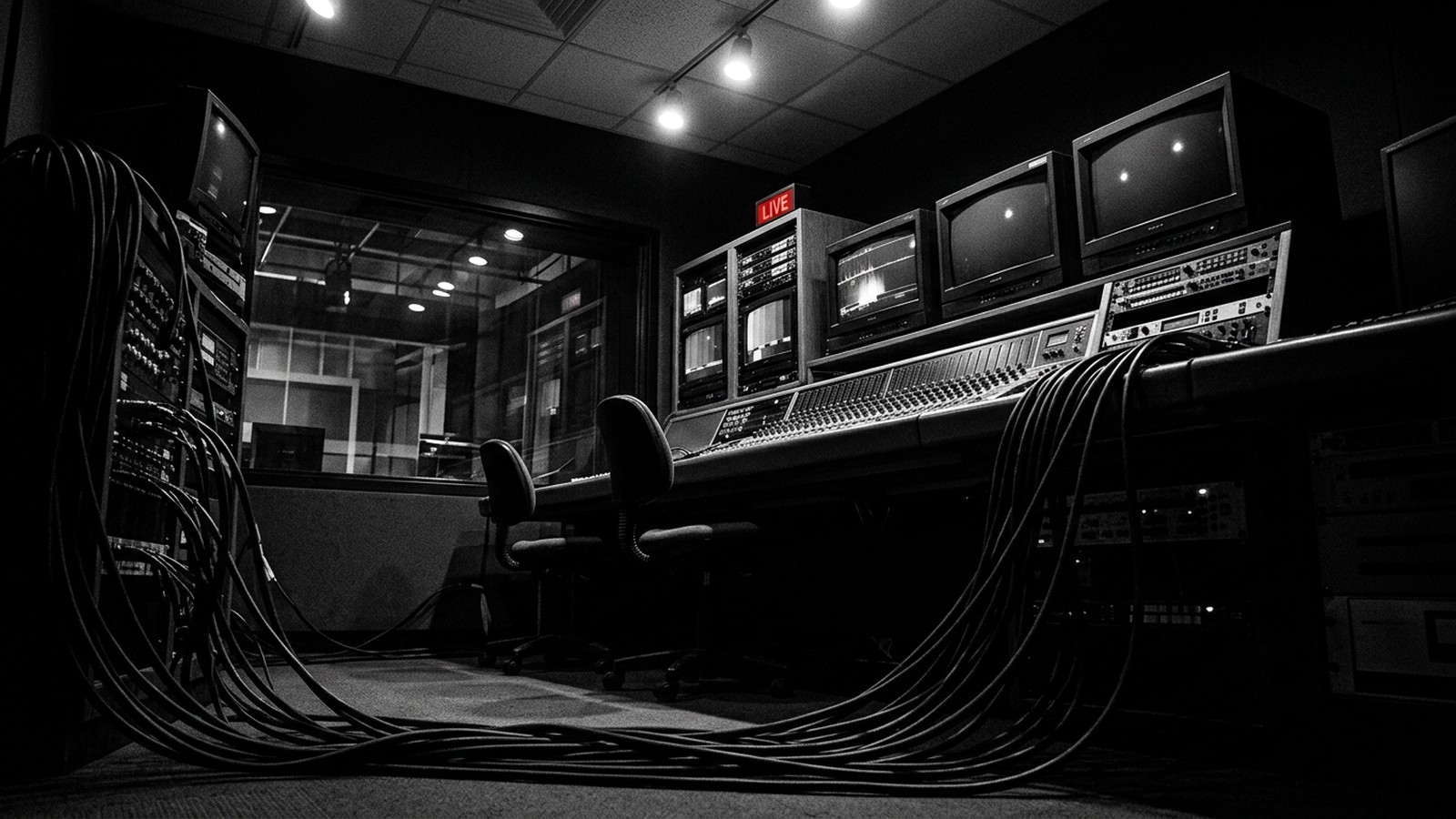
What is actually being built is a new kind of live media network. Human-led, AI-amplified, character-driven, community-based. Built around habit and trust. Built around showing up every morning when most of the internet is still screaming into the void — reactive, disposable, and indistinguishable from the noise on either side of it.
The inevitable questions follow: Is it a podcast? A YouTube show? Radio? A creator brand? A community? Software? AI content?
The honest answer is yes and no, and that is the point. New categories do not arrive neatly packaged. They arrive as hybrids. They arrive as experiments. They arrive looking strange precisely because the old labels do not fit — and the instinct to force new things into old boxes is how most people miss what is actually happening.
What the Next Network Looks Like
The next media network will not look like any of the dominant formats that came before it. It will not look like broadcast television, cable, a podcast network, or a social feed. It will not look like one person yelling into a camera and hoping the algorithm blesses them today.
It will look more alive than that. It will have hosts and characters. Live rooms. Audience participation. Recurring rituals. Companion experiences. Inside jokes that build up over months. AI systems running behind the scenes. Humans in front of the room who cannot be replaced by the systems, because the systems are there to amplify the humans, not substitute for them. And a community that does not just consume what is made, but starts to feel like it belongs to something.
That is the shift — and the reason it matters is this: the world does not need more content. It needs more places worth returning to.
A show is something people watch when they happen to remember it. A network is something people build a habit around. A feed gives you random moments. A network gives you rhythm. A clip gets attention. A room creates memory. And memory is where trust begins — not awareness, not reach, not impressions. Trust.
The Difference Between Reach and a Room
There is a version of media building that is mostly about reach: more clips, more posts, more fake authority, more people pretending they are building community when all they really have is an audience of strangers who will forget them by the weekend. I am not interested in that version.
I am interested in something people can feel. A morning layer. A room. A ritual. A place where men who still want to live with some fire can start the day with energy, honesty, humor, and momentum — before the feed decides their mood for them. That is not a small thing. That is not a side project. That is a media thesis. And it will look strange before it looks obvious.
So did everything else that mattered.
YouTube looked strange. Podcasts looked strange. Streaming looked strange. SiriusXM looked strange. Creators making real money online looked strange. People building companies from their bedrooms looked strange. At first, new behavior always looks smaller than it actually is. Until one day, it becomes the behavior. And at that point, it stops looking strange and starts looking inevitable. But the people who built it in the early, strange stage are the ones who own the category.
That is the bet here — that daily live conversation can become a genuine habit layer. That AI characters can become real parts of media worlds. That human hosts can be amplified rather than replaced. That community built through repetition compounds in ways that reach cannot. That trust accumulates when people show up in the same room, at the same time, again and again — and start to feel the difference between a product and a place.
Building Before the Room Understands
And maybe the most important part: men still want somewhere to gather. Not a lecture. Not a guru performing alpha energy. Not a perfectly produced video essay from someone they will never encounter in real time. A room. A real room with jokes, friction, honesty, stories, guests, characters, and enough unpredictability to feel genuinely alive.
Not everyone will get what is being built here yet. Good. That is usually how these things work. If everyone understands it immediately, you are probably not early — you are probably late. Obvious markets get crowded. Obvious ideas get copied. Obvious formats get commoditized. But category-defining ideas always look a little insane at first. That is the tax on building ahead of where the room currently is. And I am okay with that tax.
Because I have seen this before. I watched brands misunderstand social media before it became everything. I watched companies treat community like a side function before it became core strategy. I watched people dismiss online conversation before it became culture. And now another one of those moments is here: live conversational media is still early. Human-plus-AI media is still early. Character-driven community networks are still early. The morning as a consistent media lane is still wide open.
I do not want to sit around waiting for someone else to make it obvious before I build.
What the Network Becomes
The better question is not what this is. The better question is what this becomes if we keep showing up. What does it look like after a thousand mornings? After two thousand mornings? After more hosts, more shows, more characters, more rooms, more men who make this a genuine part of their day?
That is when the network becomes visible. Not as a logo. Not as a website. Not as a pitch deck slide. But as behavior. People returning. People recognizing the rhythm. People knowing the voices. People feeling like they are part of something that is still being built — and that their presence in the room is part of what makes it real.
That is the network.
I am not waiting for the world to understand it before I build it. I am building it so the world has something to understand.
This is what a network looks like before the world catches up: a little messy, a little early, a little hard to explain to people who need everything to fit neatly inside old boxes. But alive. And I will take alive over obvious every single time.