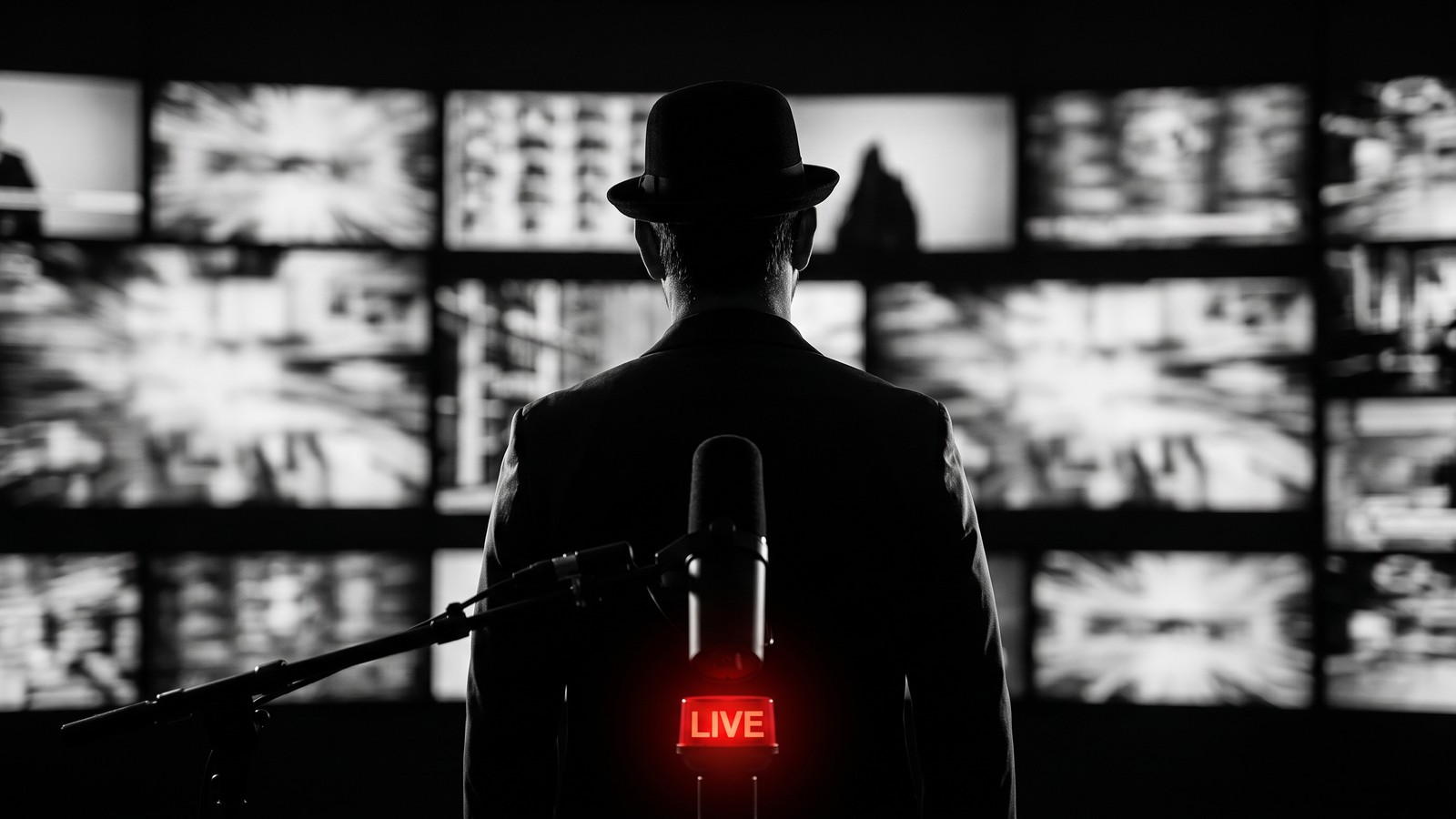
In a world where content can be fabricated, LIVE is the only format that can't be faked.
That's not a take. It's a structural reality worth understanding before your competitors do.
What's Coming
AI-generated content — text, images, video, audio — is about to dwarf human output in volume. Not someday. Now. The infrastructure is already built, the cost keeps dropping, and the quality is already good enough to fool people who aren't paying close attention.
Some of it will be indistinguishable from human work. Most of it will be good enough to fill the space. And audiences are going to respond the way humans always respond when they're surrounded by this kind of volume and persuasion: default skepticism.
You can already feel it happening. People scroll past polished content now the same way they scroll past ads. Not because they're cynical. Because they're tired. Because the pattern-matching part of the brain is learning to recognize the signal of synthetic, and it is starting to tune out anything that doesn't feel undeniably real.
Why LIVE Is Proof
You can generate a podcast. You can generate a newsletter. You can generate a brand video, a full personality, a thought leadership archive going back years. You can build an entire content presence that looks real from the outside and costs almost nothing to produce.
What you cannot generate — without genuine risk of being exposed — is a real person answering real questions in real time in front of a live audience that can push back, ask follow-ups, challenge, and test.
That exposure risk is the proof mechanism. LIVE is accountable in a way that no produced content can replicate. If something doesn't add up, the audience is there to notice. If the thinking is thin, it gets probed in real time. If the person behind the brand is not actually who they claim to be, that gap surfaces faster on LIVE than anywhere else.
That accountability is what makes LIVE the premium layer of trust. Not because it's more polished. Because it's less protected. And in an environment where everything can be polished to perfection by a model running on a server, the absence of polish becomes evidence of something real.
Receipts
Brands that build LIVE shows now won't need to prove authenticity later. They'll have receipts. Hundreds of mornings of them. A documented, timestamped, unedited record of showing up — every day, in public, willing to be wrong, willing to be questioned, willing to be seen.
That archive becomes something no amount of AI-generated content can compete with. It's not just evidence of what you've said. It's evidence of who you are, accumulated in real time, over long enough that the pattern is undeniable.
That's not a content strategy. That's a credibility asset. And credibility compounds the same way trust compounds — slowly at first, then irreversibly.
The New Competition
Here's where this leads: the brands competing in the next era will not primarily compete on content quality. They'll compete on credibility. The question audiences will be asking — often unconsciously — is not whether something is good content. It's whether it is real.
The brands with LIVE receipts can answer that question without saying a word. The proof is the archive. The proof is the history of showing up. The proof is that someone was live at 8AM this morning and will be live again tomorrow and has been live every morning for years. That consistency itself is a form of credibility no campaign can replicate.
That is not something a competitor can fabricate overnight. It has to be built. It has to be earned. And it takes exactly as long as it takes — no shortcuts, no synthetic substitute.
Stop hiding behind production. Start collecting receipts.
Because the brands with receipts won't compete on content. They'll compete on credibility. And in a world full of fabrication, that is the only competition that matters.