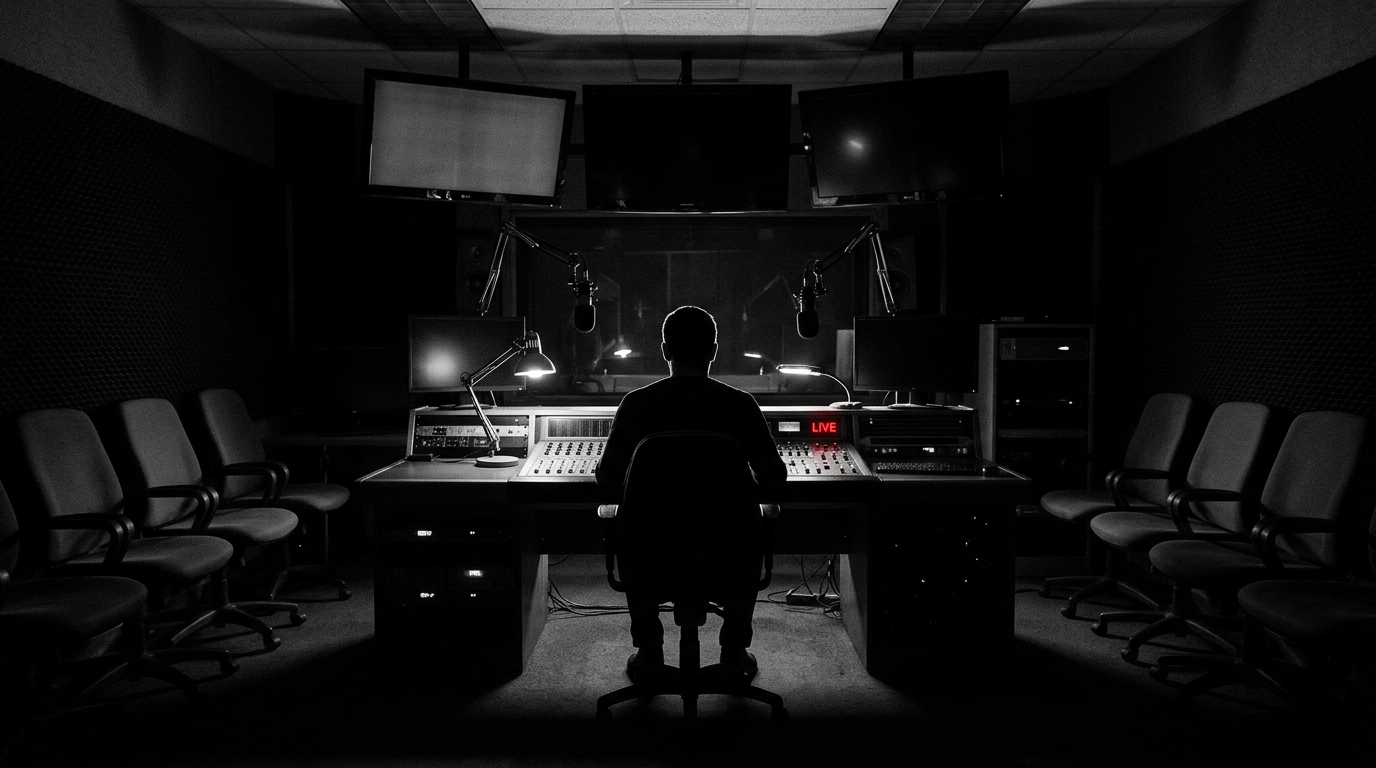
The creator economy is real. It's also almost over as the defining idea of the internet.
I know that sounds strange. Right now everything is creator this, creator that. Creator tools, creator funds, creator platforms, creator monetization, creator courses teaching creators how to create content about being creators. It never ends.
And I respect creators. Creating is hard. Publishing consistently is hard. Putting yourself out there is hard. But none of that changes what's coming.
The Bottleneck Has Shifted
The internet is drowning in content. Everyone is posting. Everyone is clipping. Everyone is reacting. Everyone has a podcast. Everyone has a newsletter. Everyone has a hot take. And now everyone has AI.
So the bottleneck is not creation anymore. Creation got cheap. The bottleneck is trust. The bottleneck is presence. The bottleneck is taste. The bottleneck is who people actually want to spend time with.
That's where the game changes.
Creators Make Content. Hosts Build Rooms.
A creator asks: what should I post today? A host asks: what kind of room am I building for people to return to?
A creator thinks about reach. A host thinks about rhythm. A creator wants attention. A host builds belonging. A creator publishes into the feed. A host becomes part of your life.
That is a completely different game.
For the last decade, the internet trained everyone to chase distribution. More views, more followers, more impressions, more clips, more hooks, more volume. But content is becoming cheap. Content is becoming infinite. Content is becoming automated. And when something becomes infinite, it loses power.
So what doesn't become cheap? Presence. Judgment. Chemistry. Timing. Trust. The ability to hold a room.
That is hosting.
The Feed Is Not a Place
The feed gives you fragments. A host gives you a room. The feed gives you noise. A host gives you rhythm. The feed gives you clips. A host gives you continuity. The feed gives you stimulation. A host gives you somewhere to come back to.
Because people are not just overwhelmed by content. They are exhausted by it. A clip here. A rant there. A headline. A reaction. A fake expert. A fake outrage. A fake life. It's too much.
And yet people still feel disconnected. That should tell us something. We have more content than ever and less connection than ever. So maybe content was never the thing people were really looking for. Maybe they were looking for rooms. For voices. For rituals. For personalities they trust.
That's why old radio mattered. That's why morning shows mattered. That's why Howard Stern mattered. That's why Oprah mattered. That's why Rogan mattered. Not because they created content. Because they hosted worlds.
A host turns attention into place. And that's exactly what the next era of media needs.
The feed is a hallway. People are walking past each other all day, bumping into takes, headlines, ads, arguments, clips, and strangers. Nobody lives in a hallway. People live in rooms.
The next great media companies will be built by people who understand how to create rooms. Not just channels. Not just shows. Rooms. A morning room. A business room. A men's health room. A founder room. A room with a point of view. A room people return to and say: these are my people.
That is the host economy.
Why Most Creators Will Struggle
The creator economy rewarded production. The host economy will reward convening. Who can bring people together? Who can set the tone? Who can make the conversation worth returning to? Who can turn strangers into regulars? Who can create a ritual strong enough to survive the feed?
Many creators will struggle because they think in posts, not rooms. They think in clips, not relationships. They think in spikes, not rituals. They think the job is to be seen. But the real job is to make other people feel like they are part of something worth showing up for.
That's harder. Because hosting is leadership. A great host is not just a performer — they're a leader of attention.
The Question That Matters Now
When AI can generate everything, the question becomes: who do I trust to gather around? Who has taste? Who has presence? Who has judgment? Who can create a room I actually want to return to?
Live changes everything here. Live creates stakes. Live creates rhythm. Live creates accountability. Live creates habit. Live creates trust in a way polished content cannot. You can fake a post. You can fake a clip. You can fake a perfect edit. It is much harder to fake showing up every morning and holding a room.
That's the moat. Not the microphone. Not the camera. Not the software. The room. The ritual. The relationship. The host.
So the question is no longer: how do I make more content? The better question is: what room should I be hosting? Who are you gathering? What conversation are you leading? What ritual are you creating? What do people become part of when they show up?
Creators can get attention. Hosts create gravity. And gravity is more powerful than reach. Reach is a spike. Gravity is return. Reach is someone seeing you once. Gravity is someone building you into their life.
The next wave of media will not be won by the people who publish the most. It will be won by the people who convene the best. Rooms are where the future gets built.