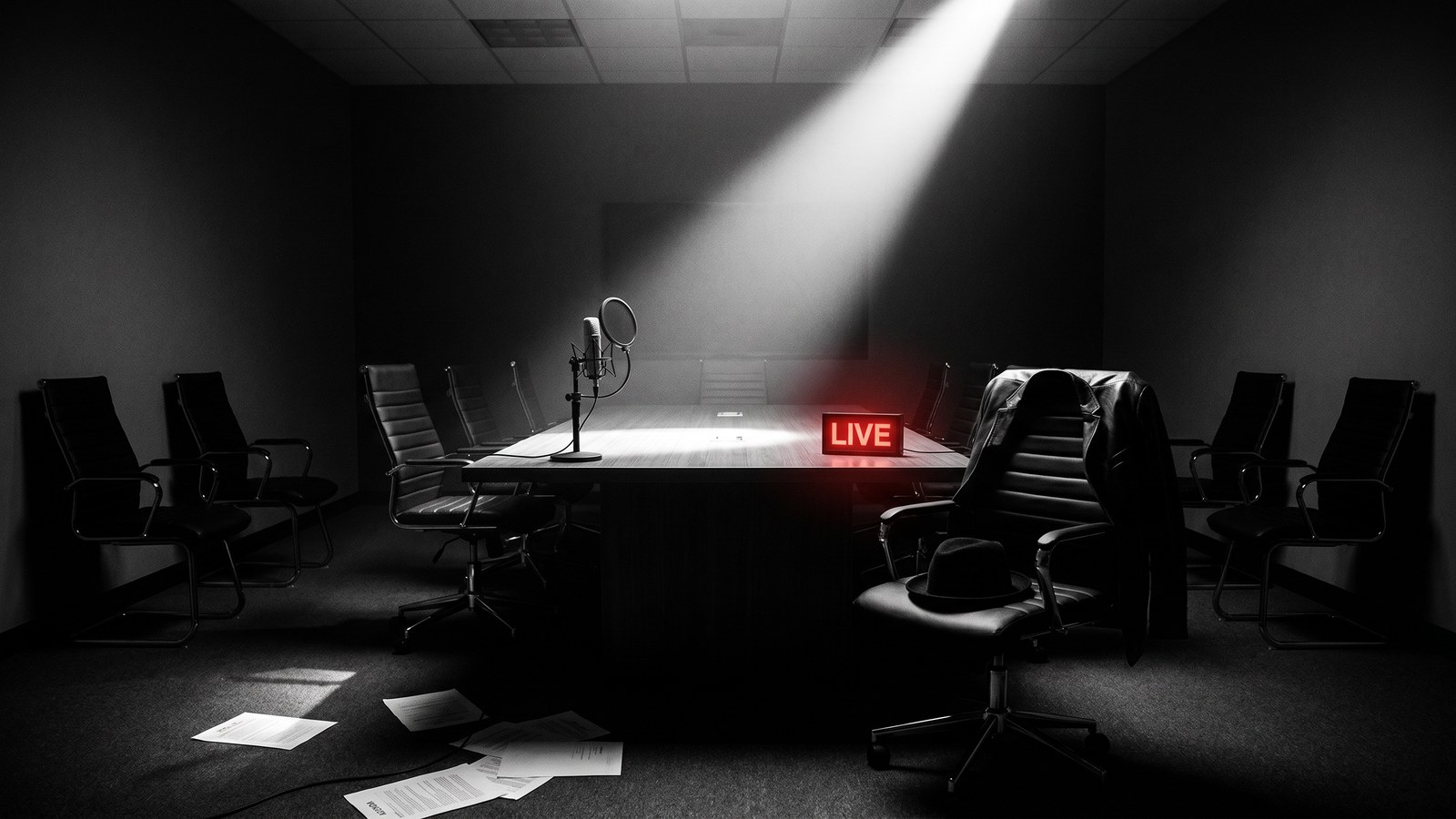
Every company on the planet should start the day with a live morning show. Not a meeting. Not a memo. Not a forty-seven-reply Slack thread that buries the actual point in a pile of reaction emojis. A show — with intention, with structure, with a host who sounds like a human being.
The companies that win this decade won't be the ones with the most sophisticated internal communications policy. They'll be the ones that own the daily conversation inside their walls — and eventually, beyond them.
What Most Teams Actually Do in the Morning
Let's be honest about what a typical company morning looks like right now. People roll in at different times. The inbox is already on fire from whatever happened overnight. Everyone is reacting to yesterday's chaos instead of setting the agenda for today. Leadership sends a long email that three people read. Maybe there's a standup where team members recite task lists and pretend they're not half checked out before the coffee kicks in.
Then everyone wonders why the culture feels flat, why the team is misaligned, and why customers interact with ten different versions of the same brand.
The morning sets everything. If the morning is reactive, scattered, and low-energy, the rest of the day inherits that baseline. You can't fix culture at 3pm. You have to design the open.
What a Company Morning Show Actually Does
A live morning show collapses several things that most organizations manage separately — and poorly — into a single, consistent daily ritual. It functions simultaneously as your internal broadcast, your standup, your culture engine, and your customer-facing proof of how seriously you take your own work.
It's where leadership sets the narrative for the day before the market does. It's where your subject matter experts become recognizable voices rather than anonymous email signatures. It's where wins get celebrated in real time rather than buried inside a quarterly deck that most people skim. It's where the team hears, in plain language, what matters today — not what mattered last quarter.
The honest test: if your customers could watch how your company starts the day, would they feel more confident buying from you — or less? If the answer is uncomfortable, something needs to change, and changing the format of your morning is the highest-leverage move available.
The Three Things You Actually Need
A company morning show doesn't require a production studio or a broadcast budget. It requires three things, and none of them are technical.
A host who can hold energy, speak like a human being, and make people want to stay in the room. This person doesn't have to be the CEO. They have to be credible, consistent, and genuinely engaged.
A simple format — fifteen to thirty minutes, same structure every day. Predictability isn't boring; it's trust. When people know what's coming, they show up prepared and they pay attention.
A point of view. What does this company actually stand for? What's the lens through which you interpret the day's events, the market, the work? A morning show without a perspective is just noise at higher volume.
A Format That Works
If I were building a company morning show from scratch, the structure would look something like this:
- Minutes 0–5: The Pulse. What happened since yesterday? Key wins, significant losses, market movement, customer stories worth sharing. Not a report — a story. The difference matters more than most people realize.
- Minutes 5–15: The Work. One theme. One priority. One clear message about where the energy points today. Not a list of everything on the board — the one thing that matters most right now.
- Minutes 15–20: The People. Spotlight a person, a team, or a customer. Humanize the numbers. Show the faces behind the metrics.
Twenty minutes. Five days a week. Fifty-two weeks. At the end of a year, your company has logged over a thousand live reps of communicating who you are and what you're building — and that volume of consistent, intentional communication changes people in ways that a policy document never will.
When the Internal Show Becomes the External Brand
Here's where it gets interesting. When a company morning show is genuinely good, it doesn't stay internal for long. Clips from the morning show become LinkedIn content. Product demonstrations become sales assets. Customer stories become marketing collateral. The show that was designed for your team starts earning attention from the people you're trying to reach in the market.
That's when a company stops being just another provider and becomes the place people go to understand what's happening in the industry. That kind of authority is defensible in a way that posting on social media once a week will never be.
The question isn't whether your company can afford to do this. The question is who the morning host of your company is right now — and whether that's a choice you're making deliberately or a role that's been defaulted to whoever sends the first fire drill of the day.
The first voice your team hears in the morning sets the tone for how they treat customers, how they respond to bad news, and how they show up when it gets hard. That's not a place to leave to chance. It's the most important slot in the schedule, and most companies have never once thought about who should fill it.