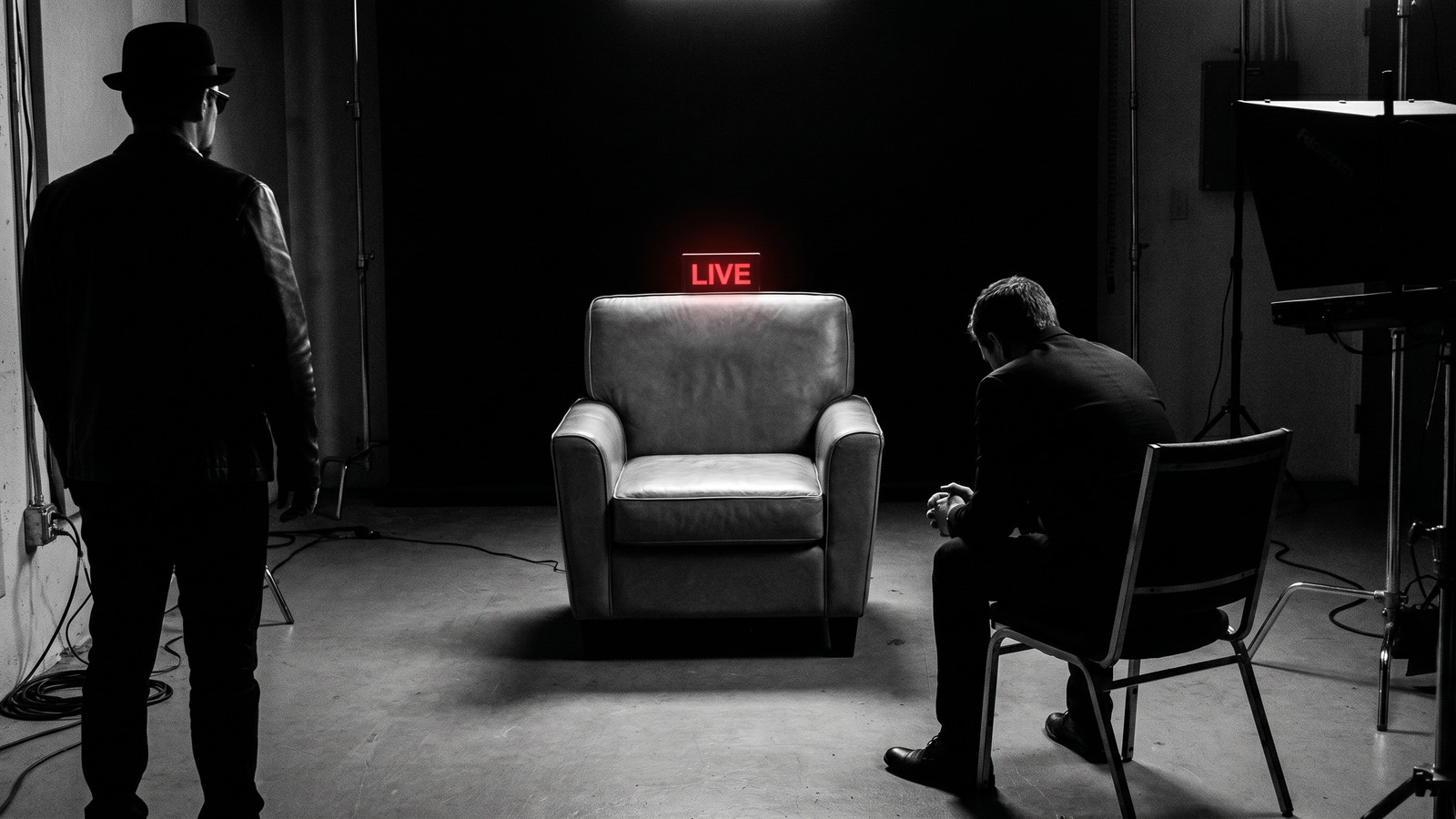
Seven hundred episodes in, and the hardest lesson is still the one most hosts resist learning: the biggest name available is rarely the best guest for the room.
Early on, I made the same mistake almost every show makes. Book the biggest name you can get. Assume their following transfers to your audience. Assume their expertise fills the conversation. Assume that the name in the thumbnail will carry the episode.
It does not work that way. It almost never works that way.
What a Big Guest Actually Delivers
A high-profile guest who shows up guarded, rehearsed, and clock-watching produces a flat episode. Every answer is pre-polished. Every anecdote has been told in a hundred other interviews. Every moment of apparent candor is a controlled release — enough to seem open, not enough to say anything that could be taken out of context. The conversation moves, technically. But it never actually goes anywhere.
And the audience senses it. They may not name it immediately, but they feel the absence of something — the absence of friction, of surprise, of genuine thought being produced in real time rather than retrieved from memory and deployed strategically. The episode is professionally fine and completely forgettable.
Contrast that with an unknown practitioner — someone with no social following to protect, no PR team managing their message, no book cycle to support — who cares deeply about the topic and is willing to think in real time. That conversation is electric. Not because they are famous. Because they are actually in the room.
What I Look For Now
After enough flat episodes with impressive guests and enough electric episodes with unknown practitioners, the selection criteria shifted significantly. The framework I use now has nothing to do with audience size or name recognition.
Active practitioners. Not former practitioners, not people who have written a book about what practitioners should do, but people who are currently in it — making decisions, running operations, navigating real problems in real time. Their thinking is alive because the situation they are describing is still alive.
A clear point of view. Not a diplomatic range of perspectives. A position. Something they are willing to defend. Guests who have a genuine stake in being right about something produce far better conversations than guests who have been trained to represent every side of every question in a way that commits them to nothing.
Willingness to be challenged. The best live moments happen when a guest enters with a position and leaves with it slightly bent — not abandoned, but refined under pressure. That only happens when ego is lower than inquiry. When the guest is more interested in figuring something out than in being seen to be correct.
Curiosity. The guests who ask questions back are almost always better than the guests who only deliver answers. Curiosity produces genuine exchange. Prepared answers produce a polished monologue split across two people's mouths.
The Architecture of a Real Conversation
Most podcasts are performances. The host performs curiosity. The guest performs insight. Both parties perform the intimacy of an exchange while carefully managing what actually gets communicated. It is a sophisticated form of theater and audiences are increasingly fluent at detecting it.
The best live shows are conversations. And there is architecture to it — structure that enables genuine exchange rather than replacing it.
Tight opening segments that establish energy and frame the terrain. A clear ramp that builds enough momentum to reach real speed before the first major question lands. Enough structure to prevent the kind of rambling that kills audience attention, and enough flexibility to allow the friction that produces something worth staying for. A host who is willing to push back, to follow a thread rather than move to the next prepared question, to let the conversation go somewhere unexpected when the unexpected place is more interesting than the plan.
That is not improv. Improv is chaotic and exhausting to watch. This is craft — the craft of a host who has prepared enough to be confident departing from the preparation when the moment calls for it.
Charisma Is Not the Variable
Brands that launch shows almost universally assume that great live conversation is a function of the host's charisma. Find someone naturally charming and magnetic, the thinking goes, and the show will work.
Charisma helps. But charisma is not the variable that determines whether a show produces real conversations or performances. Design is the variable.
The host's preparation habits. The guest selection criteria. The segment architecture. The approach to friction — whether the host leans into disagreement or deflects it. The culture the show creates around being wrong in public, around changing your mind on air, around intellectual honesty as a value rather than a liability. All of that is designed, or it is not. And if it is not designed, charisma will fill the room with energy that goes nowhere.
Design compounds. A show that is well-designed produces better conversations over time as the host develops skill and the audience develops trust. Charisma alone plateaus.
So if your brand launched a show tomorrow: would it be a performance, or a conversation? Because one creates clips. The other creates trust. And trust is the only thing that makes a show worth coming back to seven hundred episodes later.