The algorithm did not make us stupid. Let's start there.
I hear this constantly. The algorithm is ruining people. The algorithm is making everyone dumb. The algorithm is destroying attention spans and turning society into a circus. And I get it. I really do. But that's not the whole truth.
The algorithm did not invent outrage. It did not invent insecurity. It did not invent jealousy, tribalism, fake expertise, or people pretending to know things they absolutely do not know. Humans were already doing all of that. The algorithm just looked at it and said: perfect. We can scale this. We can measure this. We can recommend this. We can sell ads against this.
That is where everything changed.
Stupidity as a Business Model
Once stupidity became profitable, stupidity became strategic. It stopped being an accident. It became a business model.
The dumbest take wins. The angriest face wins. The most dramatic headline wins. The most confident idiot in the room wins. Not because they are right. Because they are clickable. Because they hold attention. Because they trigger something. And triggering something is now more valuable than teaching something.
That is the game. That is the sickness.
We are living in an economy where the fastest way to grow is often to make people worse. More reactive. More suspicious. More divided. More insecure. More addicted. More certain about things they barely understand. And the machine does not care. The machine does not wake up asking how to make you a better person. The machine asks: what will stop the scroll?
Not what is true. Not what is helpful. Not what is wise. What will stop the thumb? If rage stops the thumb, you get rage. If fear stops the thumb, you get fear. If some guy yelling into a microphone about how everyone else is weak stops the thumb, congratulations — here are 600 more guys yelling into microphones about how everyone else is weak. That is not culture. That is extraction.
Your Feed Is Not Your Identity
The algorithm is not your friend. It is not your mentor. It is not your community. It is not your conscience. It is not your source of truth. It is a machine built to observe your impulses and feed them back to you until your impulses start to feel like your identity.
That line matters. Because people now think their feed is who they are. It is not. Your feed is not your personality. Your feed is not your philosophy. Your feed is not your worldview. Your feed is a mirror designed by someone who makes money every time you stare at it longer. And that mirror is distorted.
It does not show you the world. It shows you the version of the world most likely to keep you emotionally activated. That is why everyone feels like everything is on fire all the time. Because calm does not monetize well. Nuance does not spread fast. A reasonable conversation between two mature adults does not usually beat a screaming match with subtitles.
We are not just consuming content anymore. We are being conditioned. Conditioned to react before we think. Conditioned to judge before we understand. Conditioned to perform certainty before we have done the work. Conditioned to confuse volume with courage. Conditioned to believe that if something does not immediately provoke us, entertain us, validate us, or enrage us, it must not matter.
That is dangerous. Especially for men — already being pulled in a thousand directions by work pressure, money pressure, health pressure, family pressure, identity pressure, aging pressure. Now add a machine that follows them around all day whispering: you are behind, you are weak, you are losing, you need this ideology, you need this enemy, you need this fake version of masculinity sold by someone who has never had to carry anything heavier than a ring light.
The Feed Trains You
The feed is not passive. It trains what you notice. It trains what you believe is normal. It trains what you think success looks like. It trains what you think men are supposed to be. It trains what you think your own life is missing.
Most people have handed the training over completely. They wake up, reach for the phone, and let the machine tell them what kind of day they are about to have. Before they have talked to their family. Before they have moved their body. Before they have stepped outside. Before they have had one original thought of their own. They let the feed enter first.
And then they wonder why they feel anxious, pissed off, distracted, and vaguely disgusted by humanity by 8:17 in the morning. That is not an accident. That is a design win. Someone won when you feel that way. Someone measured it. Someone optimized it. Someone put it in a deck and called it engagement.
That word should bother us more than it does. Engagement sounds clean and professional. But what does it actually mean? A lot of the time it means agitation, compulsion, addiction, people fighting in comment sections, people hate-watching someone they claim to despise, people posting things they do not even fully believe because they know it will perform.
When Smart People Flatten Themselves
Here is the part that actually bothers me. Stupidity becomes truly dangerous not when dumb things exist — they always have — but when intelligent people start pretending to be dumber because the system rewards it. That is the rot.
When smart people flatten themselves for reach. When serious people turn themselves into cartoon characters. When experts start talking like carnival barkers. When founders become engagement farmers. When creators stop asking what they actually believe and start asking what will perform. That is how culture gets cheap. Not all at once. Post by post. Hot take by hot take. Until eventually nobody is trying to be useful. They are trying to be unavoidable.
And those are not the same thing. Being unavoidable is not the same as being valuable. Going viral is not the same as being right. Getting attention is not the same as earning trust.
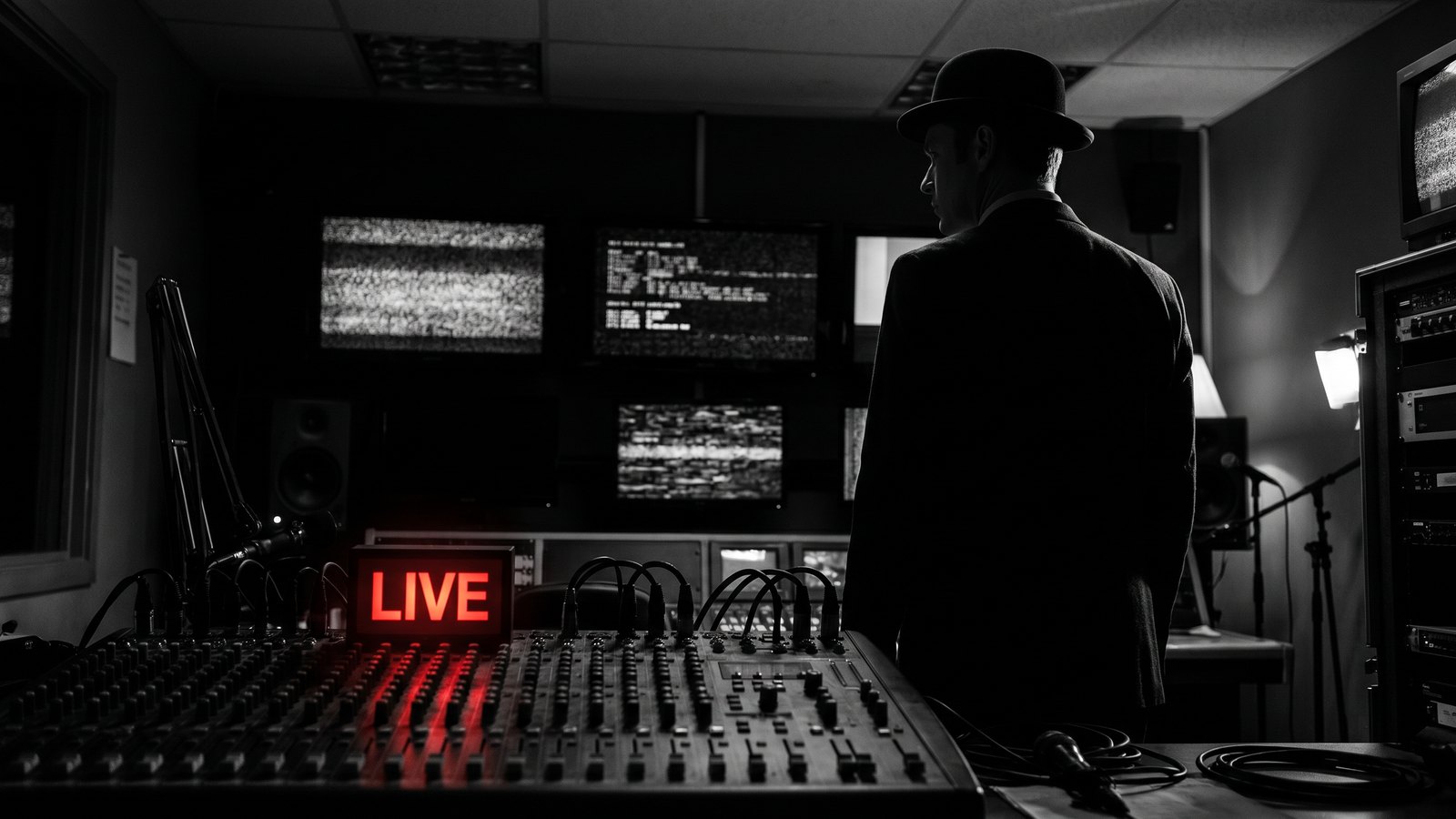
That is why live conversation matters. Because live is harder to fake. When you are live, you cannot hide behind seventeen edits. You cannot polish every rough edge. You have to be there. You have to listen. You have to respond. You have to think in public. You have to let people see the difference between a real point of view and a rehearsed content strategy. In a world flooded with optimized stupidity, real presence becomes a filter.
Human trust does not work like instant engagement. Trust takes time. It takes repetition. It takes showing up. It takes being seen in more than one mood. It takes being wrong and not disappearing. It takes being funny, serious, messy, honest, and still coming back the next day.
Use the machine. Do not become the machine. Use the algorithm. Do not let the algorithm use you into a worse version of yourself. Maybe that starts with one brutally simple question: is this making me sharper, or just more reactive? Ask that about what you watch. Ask that about what you post. Ask that about the first thing you let into your morning.
The algorithm did not make us stupid. It made stupidity profitable. But we are still responsible for whether we buy it. We are still responsible for what we reward with our attention. Because every click is a vote. And every extra second you give to garbage tells the machine: more of this, please.
Maybe the rebellion is not deleting everything and moving into the woods. Maybe the rebellion is becoming harder to manipulate. Harder to trigger. Harder to fool. Harder to monetize at our worst. Because the machine is doing exactly what we trained it to do. If we want better, we have to become harder to cheapen.